

What is Hypertrophy Training and Why Does It Matter?
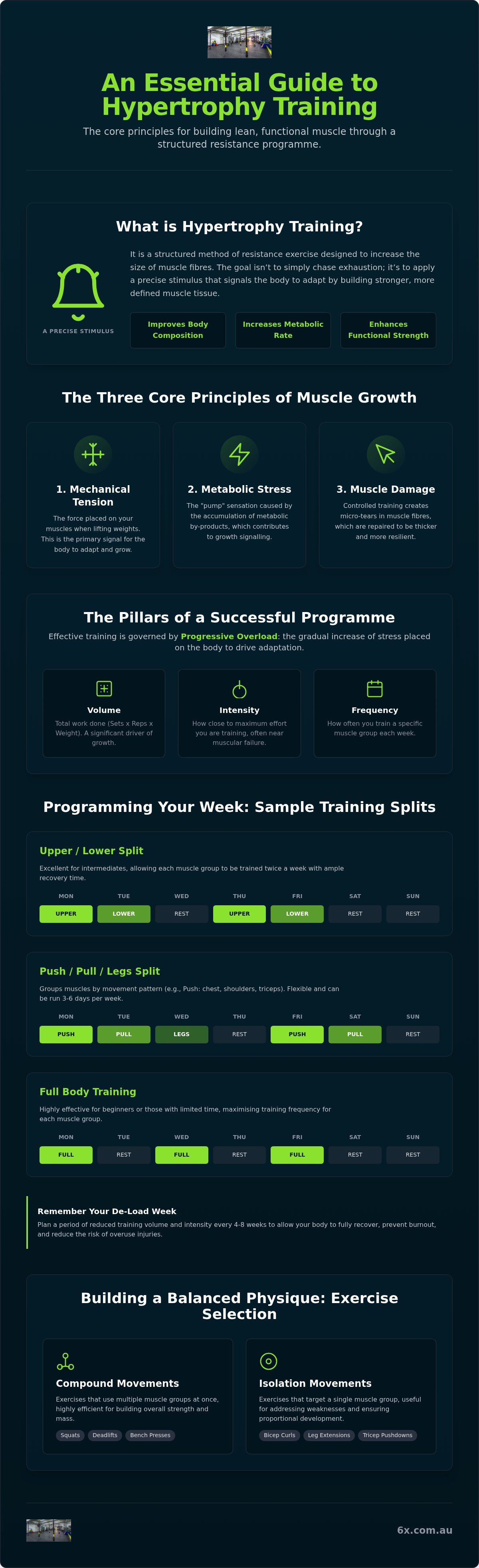
Hypertrophy training is a structured method of resistance exercise designed specifically to increase the size of your muscle fibres. It’s not about lifting until you’re exhausted; it’s about applying a precise stimulus that signals your body to adapt and grow stronger, more defined muscle tissue. For many people, the term "hypertrophy" brings to mind images of competitive bodybuilders, but the reality is quite different.
A well-designed hypertrophy programme focuses on building lean muscle, which is fundamental to improving body composition, increasing your metabolic rate, and enhancing functional strength for everyday life. The goal isn’t necessarily to become bulky—it’s to create a stronger, more capable body. This is achieved through a systematic approach to training that prioritises technique and consistency over simply lifting the heaviest weight possible.
The Core Principles of Muscle Growth
To stimulate muscle growth, a training programme needs to incorporate three key elements:
- Mechanical Tension: This is the force placed on your muscles when you lift weights. By challenging your muscles with appropriate resistance, you create the primary signal for growth.
- Metabolic Stress: This is the "pump" sensation you feel during a workout. It’s caused by the accumulation of metabolic by-products in the muscle cells, which contributes to the chemical signalling that promotes hypertrophy.
- Muscle Damage: Controlled resistance training creates microscopic tears in the muscle fibres. During recovery, the body repairs these fibres, making them thicker and more resilient than before.
Why a Private Studio is a Better Fit for Structured Training
For residents in Mascot and surrounding areas, the choice between a large commercial gym and a private studio can significantly impact results. A common frustration in busy gyms is waiting for equipment, which disrupts the strict rest intervals crucial for effective hypertrophy training. In a private environment like our Maroubra studio, just a 10-15 minute drive from Mascot, every session is structured and efficient. With a dedicated coach, you can ensure that every repetition is performed with correct form, maximising the stimulus for growth while minimising the risk of injury.
The Three Pillars of a Successful Hypertrophy Programme
Building muscle effectively relies on a few core principles that must be managed correctly. While the internet offers endless workout routines, progress often stalls without a clear understanding of these variables. A successful programme is built on the systematic application of volume, intensity, and frequency, all governed by the principle of progressive overload.
Progressive overload is the gradual increase of stress placed upon the body during exercise to drive adaptation.
- Volume: This refers to the total amount of work you do, typically calculated as sets x reps x weight. It is one of the most significant drivers of muscle growth.
- Intensity: This describes how close to your maximum effort you are training. For hypertrophy, this usually means training close to muscular failure, but without compromising form.
- Frequency: This is how often you train a specific muscle group. Finding the right frequency allows for adequate recovery and optimal muscle protein synthesis.
Mastering Progressive Overload
Simply adding more weight to the bar is just one way to apply progressive overload. A good coach will manipulate several variables to keep you progressing without hitting a plateau. These can include increasing the number of repetitions, adding sets, reducing rest times between sets, or improving your control and range of motion during an exercise. Critically, this process requires careful tracking. Without a detailed record of your workouts, it’s nearly impossible to ensure you are consistently applying a greater stimulus over time.
The Role of Exercise Selection
A balanced physique is built using a combination of different movement types. A thoughtful hypertrophy programme includes both:
- Compound Movements: Exercises like squats, deadlifts, and bench presses use multiple muscle groups at once. They are highly efficient for building overall strength and muscle mass.
- Isolation Movements: Exercises like bicep curls or leg extensions target a single muscle group. They are useful for addressing weaknesses and ensuring all muscles are developed proportionally.
The right exercises for you depend on your body’s unique structure, injury history, and specific goals. A personalised programme, like those offered through our personal training in Maroubra, ensures your workout is tailored to your needs, promoting balanced development and reducing injury risk.
Programming Your Week: Sample Hypertrophy Splits
For busy professionals, finding a training schedule that delivers results without demanding hours in the gym every day is key. Consistency is far more important than intensity, and a well-structured plan makes it easier to stay on track. Here are a few common and effective training splits:
- The Upper/Lower Split: This involves two upper-body days and two lower-body days per week. It’s an excellent choice for intermediate lifters as it allows each muscle group to be trained twice a week with ample recovery time.
- The Push/Pull/Legs Split: This structure groups muscles by their movement pattern: 'push' day (chest, shoulders, triceps), 'pull' day (back, biceps), and a 'legs' day. It can be run three to six days a week, offering flexibility.
- Full Body Training: Training the entire body two or three times per week is a highly effective option, especially for beginners or those with limited time. It maximises training frequency for each muscle group.
An essential part of any long-term plan is the 'de-load' week. This is a planned period of reduced training volume and intensity, typically taken every 4-8 weeks, to allow your body to fully recover, prevent burnout, and reduce the risk of overuse injuries.
Nutrition: Fuelling Muscle Growth
Training provides the stimulus for muscle growth, but nutrition provides the raw materials. Without proper fuel, even the best programme will fall short. While individual needs vary, a few nutritional guidelines are fundamental for hypertrophy:
- Sufficient Protein: Protein is essential for repairing and building muscle tissue. A common recommendation for active individuals is to consume between 1.6 and 2.2 grams of protein per kilogram of body weight.
- Adequate Energy: To build new muscle tissue, your body generally needs a slight energy surplus. This means consuming slightly more calories than you burn. Carbohydrates are particularly important for fuelling high-volume workouts.
- Nutrient Timing: Consuming a meal containing both protein and carbohydrates within a few hours before and after your workout can help optimise performance and kick-start the recovery process.
The Importance of Recovery and Data-Driven Progress
Muscle isn’t built in the gym; it’s built during recovery. The time you spend resting, sleeping, and refuelling is when your body repairs the damage from training and adapts by growing stronger. Prioritising sleep is one of the most effective things you can do to support your hypertrophy goals, as this is when key growth-related hormones are released.
However, simply feeling rested isn't enough to know if your programme is truly working. Traditional bathroom scales can be misleading, as they don’t distinguish between fat, water, and muscle. An InBody scan in Maroubra provides a detailed analysis of your body composition, allowing you to track changes in Skeletal Muscle Mass with precision. This data is invaluable for validating your training and nutrition, confirming that the weight you're gaining is lean tissue, not fat.
Advanced Recovery Tools in the Eastern Suburbs
To further support recovery, our Maroubra studio is equipped with facilities designed to help reduce inflammation and muscle soreness. Tools like infrared saunas and ice baths can aid circulation and muscle repair, helping you feel ready for your next session sooner. These modalities are more than just trends; they are practical tools that can complement a demanding training schedule and help manage the delayed onset muscle soreness (DOMS) that often accompanies a new hypertrophy programme.
Start Your Hypertrophy Programme at 6X Training
If you're looking for a hypertrophy training programme near Mascot, our private studio in Maroubra offers a focused, supportive environment built for results. Since 2011, 6X Training has helped hundreds of local residents build strength and transform their bodies through structured, personalised coaching.
We move beyond generic workout plans. Our process begins with a comprehensive assessment and movement screen to understand your body, followed by an InBody scan to establish a clear baseline. From there, we design a programme that is tailored specifically to your goals, abilities, and schedule. With a dedicated coach providing accountability and ensuring your technique is flawless, you can focus entirely on your training.
If you're ready to stop guessing with your workouts and start building muscle with a clear, structured plan, the first step is to see how we can help. Find out more about our introductory programmes and book an initial consultation to begin your journey.
Learn more about our programmes and get started with a personalised plan at 6X Training.
Frequently Asked Questions About Hypertrophy Training
What is the difference between strength and hypertrophy training?
While related, they have different primary goals. Strength training focuses on increasing maximal force production, typically using heavier weights for fewer repetitions. Hypertrophy training focuses on increasing muscle size, generally using moderate weights for a higher number of repetitions to generate metabolic stress and volume.
How many days a week should I train for hypertrophy?
For most people, training 3-5 days per week is effective. The optimal frequency depends on your recovery capacity, schedule, and the type of training split you use. A beginner might see great results from three full-body sessions, while someone more advanced might benefit from a four or five-day split.
Can I build muscle while losing fat at the same time?
This process, known as body recomposition, is possible, particularly for beginners or individuals returning to training after a break. It is more challenging for experienced lifters. It requires a carefully managed diet with high protein intake and a small calorie deficit, combined with a consistent resistance training programme.
How long does it take to see visible results from a hypertrophy programme?
With consistent training and appropriate nutrition, most people will start to feel stronger and notice small changes within 4-8 weeks. More significant, visible changes in muscle size typically become apparent after 3-6 months of dedicated effort.
Is hypertrophy training suitable for beginners or people over 40?
Absolutely. A properly scaled hypertrophy programme is beneficial for all ages and experience levels. For beginners, it builds a strong foundation of muscle and proper movement patterns. For adults over 40, it is one of the most effective ways to combat age-related muscle loss (sarcopenia), maintain metabolic health, and improve bone density.
What should I eat before and after a hypertrophy workout?
Before your workout, aim for a meal rich in carbohydrates for energy and some protein, consumed 1-3 hours prior. After your workout, a meal containing both protein (to aid muscle repair) and carbohydrates (to replenish glycogen stores) is ideal to support recovery.
Article by
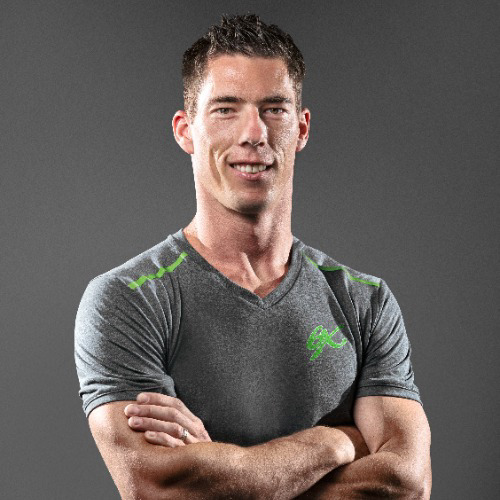
Brad Ellison
Brad Ellison is a personal trainer, weight loss coach and founder of 6X Training in Maroubra, Sydney. Since 2006, he has helped clients across the Eastern Suburbs lose weight, build strength and improve their health through personalised fitness coaching, nutrition support and accountability. His expertise includes fat loss, body composition improvement, strength training and sustainable lifestyle change.
General Health Disclaimer
This article is general information only and does not replace individual medical, allied health or nutrition advice. 6X Training coaches are personal trainers, not physiotherapists, dietitians, exercise physiologists or other healthcare practitioners. If you have an injury, chronic health condition, disability or you're unsure whether exercise is appropriate for you, please speak with your GP or a qualified healthcare professional before starting a new training or nutrition programme. NDIS participants should confirm funding and plan details with their support coordinator or plan manager.