

The Maroubra Weight Loss Challenge: Why Meal Planning is Your Secret Weapon
Living in Maroubra offers an active lifestyle, from the Coastal Walk to early morning surfs. But the fast pace can also lead to decision fatigue, especially when it comes to food. After a long day, the convenience of takeaway from Maroubra Junction or The Spot in Randwick often wins over a home-cooked meal. This is where most fat loss efforts fail.
Without a system, you’re left making dozens of food choices a day, relying on willpower that inevitably runs out. Meal planning is the strategic tool that bridges the gap between your fitness goals and your daily reality. It’s not about restrictive dieting; it’s about creating a structure that makes healthy eating the easiest option.
Why Generic Plans Fail Maroubra Locals
A generic meal plan downloaded from the internet can’t account for the specifics of your life. It doesn't know if you're training three times a week, chasing kids around, or sitting at a desk in the CBD. These plans often fail because they don’t consider your unique energy needs, your training volume, or the social realities of living in Sydney, where weekend brunches and dinners with friends are part of the culture.
The Financial Benefit of Planning Ahead
A consistent complaint we hear is that healthy eating is expensive. While quality ingredients can cost more, a lack of planning is the real budget-killer. Meal planning drastically reduces food waste and impulse buys at the supermarket. A planned, home-cooked lunch might cost $7-$10 in ingredients, whereas a standard café salad or sandwich in the Eastern Suburbs can easily be double that. Strategic shopping at local Maroubra butchers for lean protein or Harris Farm for seasonal produce means you get better quality food for less money over the week.
Foundations of a Fat Loss Meal Plan: Kilojoules, Macros, and Food Quality
To achieve sustainable fat loss, you need to understand the basic principles of nutrition. This isn’t about following fads; it’s about giving your body what it needs to function well, retain muscle, and burn fat.
- The Energy Balance Equation: In Australia, we measure food energy in kilojoules (kJ). For fat loss to occur, you need to consume fewer kilojoules than your body burns. This is known as a kilojoule or calorie deficit. It’s the fundamental principle of weight management.
- Protein is Non-Negotiable: When you're in a kilojoule deficit, getting enough protein is crucial. It helps you feel full, reducing cravings and snacking. Most importantly, it helps your body preserve lean muscle mass, ensuring that the weight you lose is primarily from fat.
- Focus on Whole Foods: Building your meals around lean proteins, vegetables, fruits, and quality carbohydrates provides the fibre, vitamins, and minerals your body needs. These foods are more satiating than highly processed options, helping you manage hunger effectively.
Calculating Your Personal Needs
Your starting point for any meal plan is understanding your body's baseline energy needs, known as your Basal Metabolic Rate (BMR). This is the number of kilojoules your body burns at rest. However, your BMR doesn't account for your daily activity, from walking to the shops to your personal training sessions. Your total daily energy expenditure is much higher. A dangerously low-kilojoule diet can slow your metabolism and lead to muscle loss, making long-term fat loss harder. Your plan must provide enough energy to fuel your training and recovery.
Sourcing Quality Food in Maroubra
You don’t need to visit expensive specialty stores to eat well. Maroubra and its surrounding suburbs offer excellent options for fresh, quality ingredients. Local butchers are a great source for lean cuts of meat, while places like Harris Farm in Randwick provide a wide variety of seasonal fruit and vegetables. Even at major supermarkets, focusing on the outer aisles—where fresh produce, meat, and dairy are located—is a simple strategy to avoid processed foods packed with added sugars and unhealthy fats.
DIY Prep vs. Meal Delivery: A Strategic Choice
Meal delivery services are popular in Sydney for a reason: they are convenient. For busy professionals, they can seem like the perfect solution. However, they are often a short-term fix rather than a long-term strategy. While they can be a useful tool to navigate a particularly busy week, relying on them exclusively means you don't learn the skills of portion control, cooking, or understanding your body's needs. The best approach is often a hybrid one, combining home-cooked staples with pre-made options for emergencies.
The only way to know for certain if your approach is working is to measure your progress accurately. An InBody scan in Maroubra provides detailed data on your body composition, showing changes in muscle mass and body fat percentage that the bathroom scales can't.
The Power of the 'Batch Cook' Strategy
The idea of spending an entire Sunday in the kitchen is daunting for most people. A more effective method is the 'batch cook'. This doesn't mean prepping 21 identical meals. It means spending 60-90 minutes preparing a few key components that can be mixed and matched throughout the week.
For example, you could:
- Cook a large batch of two lean proteins (e.g., grilled chicken breast, lean beef mince).
- Prepare two complex carbohydrate sources (e.g., quinoa, roasted sweet potato).
- Chop a variety of vegetables to be used in salads or stir-fries.
With these components ready, assembling a healthy meal takes just a few minutes, making it easier to stay on track even on your busiest days.
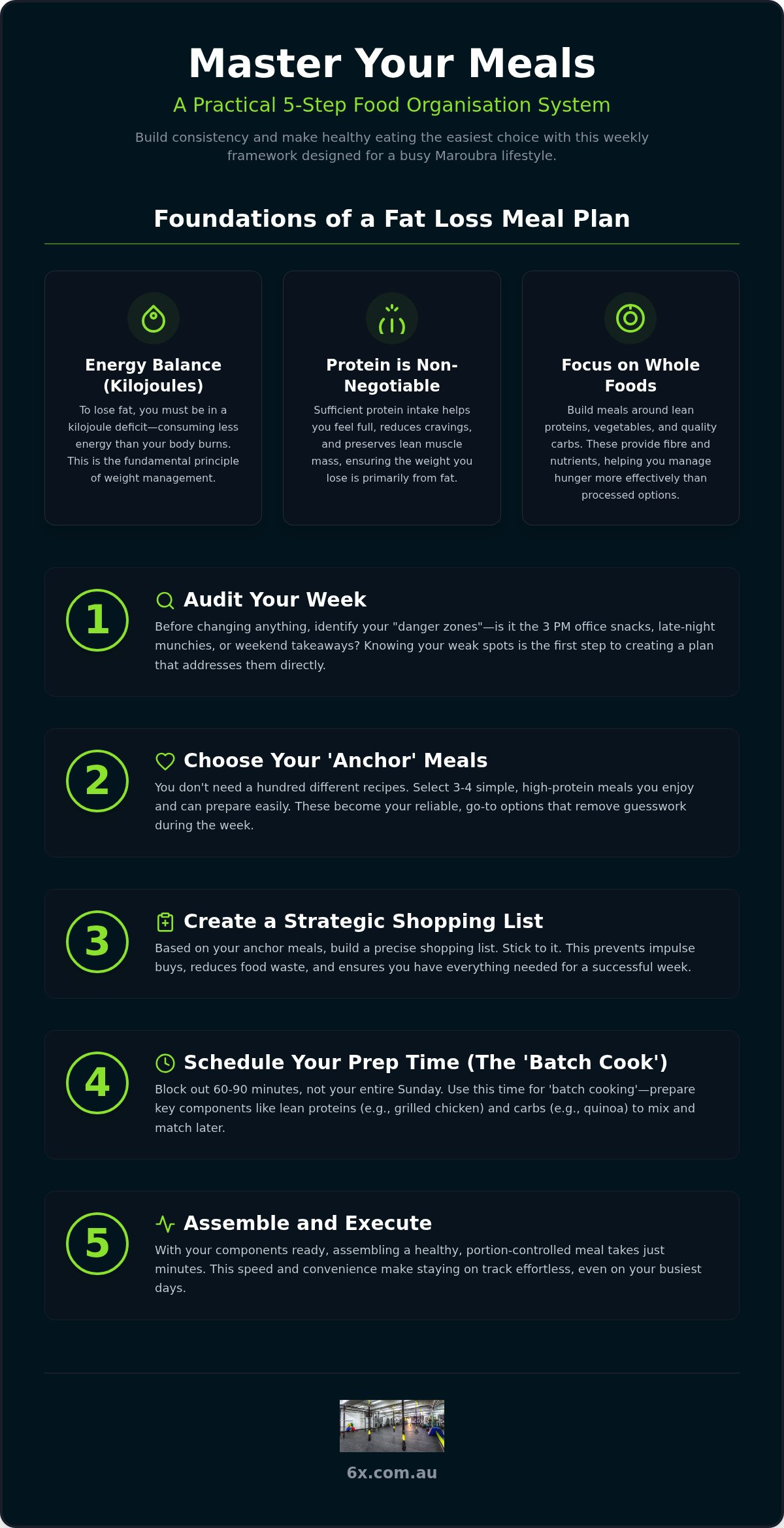
A 5-Step Weekly Food Organisation System
A successful meal plan for weight loss in Sydney requires a simple, repeatable system. Here are five steps to take control of your weekly nutrition and build consistency.
- Audit Your Week: Before you change anything, look at your current habits. Identify your "danger zones"—is it the 3 PM office snacks, the late-night munchies, or the weekend takeaway habit? Knowing your weak spots is the first step to creating a plan that addresses them.
- Choose Your 'Anchor' Meals: You don't need a hundred different recipes. Select 3-4 simple, high-protein options for breakfast, lunch, and dinner that you genuinely enjoy. Rotating these meals reduces decision fatigue and simplifies your grocery shopping.
- Write the List and Stick to It: Plan your meals for the week ahead, create a grocery list based on that plan, and commit to buying only what's on the list. This single habit saves money, reduces waste, and eliminates junk food from your pantry.
- Prep the 'Friction' Items: Identify the small tasks that stop you from cooking. Is it chopping vegetables? Marinating meat? Washing lettuce? Spend 30 minutes prepping these "friction" items ahead of time to make meal assembly fast and easy during the week.
- Track and Adjust: Keep a simple food diary or use an app for a week or two to build awareness of your habits and portion sizes. Accountability is key; having a coach review your progress and help you make adjustments ensures you stay on the right path.
How 6X Training Supports Your Nutrition in Maroubra
A meal plan is just a document. Making it work requires support, accountability, and the right data to guide your decisions. At 6X Training, we integrate nutrition coaching into our programmes to ensure your efforts in the gym are reflected in your results.
Data-Driven Nutrition Coaching
We move past the guesswork of standard diets. Our approach starts with a comprehensive body composition analysis to understand your unique starting point—your muscle mass, body fat percentage, and metabolic rate. This data allows us to build a personalised kilojoule and macronutrient target that aligns with your specific fat loss goals.
As you get stronger and fitter through training, your metabolism changes. We regularly re-assess your progress to adjust your nutrition plan, ensuring it continues to support your body's evolving needs. This systematic process removes the frustration of plateaus and ensures you are always moving forward.
If you're tired of generic advice and ready for a structured approach to nutrition that complements your training, the first step is to get a clear picture of where you stand. Our Body Blueprint assessment provides the in-depth data and professional guidance needed to create a plan that works for you.
Ready to stop guessing? Book your Body Blueprint assessment today to get a detailed analysis of your body composition and a clear strategy for your nutrition.
Disclaimer: The information in this article is for educational purposes only. It is not a substitute for professional medical advice. Always consult with a healthcare professional or registered dietitian before making significant changes to your diet or exercise routine.

Article by
Brad Ellison
Brad Ellison is a personal trainer, weight loss coach and founder of 6X Training in Maroubra, Sydney. Since 2006, he has helped clients across the Eastern Suburbs lose weight, build strength and improve their health through personalised fitness coaching, nutrition support and accountability. His expertise includes fat loss, body composition improvement, strength training and sustainable lifestyle change.
General Health Disclaimer
This article is general information only and does not replace individual medical, allied health or nutrition advice. 6X Training coaches are personal trainers, not physiotherapists, dietitians, exercise physiologists or other healthcare practitioners. If you have an injury, chronic health condition, disability or you're unsure whether exercise is appropriate for you, please speak with your GP or a qualified healthcare professional before starting a new training or nutrition programme. NDIS participants should confirm funding and plan details with their support coordinator or plan manager.