
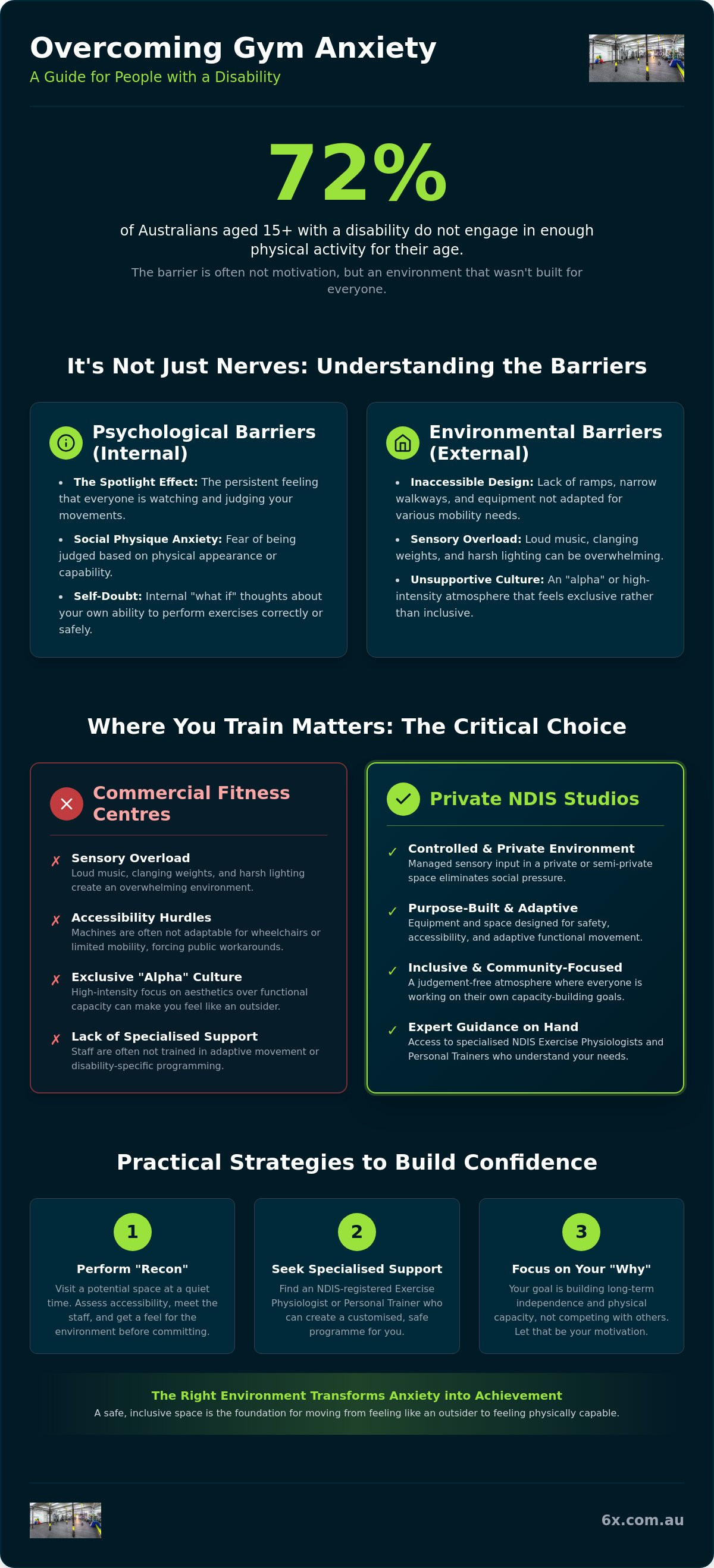
Did you know that 72% of Australians aged 15 and over with a disability do not engage in enough physical activity for their age? For many, the barrier isn't a lack of motivation. It is the overwhelming reality of overcoming gym anxiety with a disability in spaces that simply weren't built for everyone. You've likely felt the frustration of commercial gyms where equipment is inaccessible or the fit-focused culture makes you feel like an outsider. It's common to worry about holding people up or needing extra help in a crowded, high-pressure environment.
We believe your fitness journey should be defined by what you can achieve, not by the obstacles in your way. This guide provides practical strategies and specialised support to help you transform that anxiety into a sense of belonging and physical strength. You'll learn how to find a safe, inclusive training space, the role of customised capacity-building programmes in gaining independence, and how the right professional guidance makes all the difference in 2026.
Key Takeaways
- Learn to identify the difference between internal self-doubt and external environmental barriers to better manage your training experience.
- Discover the benefits of private NDIS studios over crowded commercial gyms for a safer, more inclusive approach to fitness.
- Master practical "recon" strategies for overcoming gym anxiety with a disability and building your confidence before your first session.
- Understand how specialised NDIS Exercise Physiology and Personal Training can fast-track your independence and physical capacity.
- Explore how a community-focused, judgement-free environment helps you move from feeling like an outsider to feeling physically capable.
What is Gymtimidation? Understanding Gym Anxiety Through a Disability Lens
Gymtimidation is often dismissed as a simple case of first-day nerves, but for those living with a disability, it is far more complex. It's the point where social pressure meets environmental exclusion. You aren't just worried about your workout; you're managing a space that might not have been designed with your body in mind. This feeling is a logical response to a lack of accessibility. It's an internal alarm bell triggered by external barriers. When the environment doesn't accommodate your needs, feeling like an outsider isn't a personal failing; it's a structural reality.
Many people experience the spotlight effect, which is the persistent belief that every person in the room is scrutinising your movements or how you set up your equipment. This often manifests as Social physique anxiety (SPA), where the fear of being judged based on physical appearance or capability becomes a major barrier to entry. When you're focused on overcoming gym anxiety with a disability, acknowledging that these feelings are valid is the first step toward reclaiming your health. You're not just fighting self-doubt; you're often fighting an environment that hasn't prioritised your inclusion.
To help you understand that these feelings are shared by many, watch this perspective on gym anxiety:
Common Triggers in Commercial Fitness Centres
Commercial gyms are frequently designed for a specific type of user, which creates several immediate triggers for anxiety. Sensory overload is a primary culprit. The combination of loud music, clanging weights, and harsh fluorescent lighting can be overwhelming, especially for neurodivergent individuals. Accessibility is another major hurdle; many machines aren't adaptable for wheelchairs or those with limited mobility, forcing you to find workarounds in a public space. Finally, the alpha culture of high-intensity athletes can make the space feel exclusive rather than inclusive. This environment often prioritises aesthetic performance over functional capacity building, leaving you feeling like you don't belong in the room.
The Emotional Toll of Avoiding Exercise
Avoiding the gym doesn't just impact your physical strength; it takes a heavy emotional toll. Gym avoidance can stall your progress toward independence and long-term capacity building. It often leads to a cycle of isolation where anxiety prevents you from accessing vital community health hubs. When you miss out on these connections, your social participation goals suffer alongside your physical ones. Defined simply, gym anxiety is a physiological response to perceived social risk. Our NDIS Personal Training Maroubra services are specifically designed to bypass these barriers, providing a private, expert-led environment where your progress is the only priority. Overcoming gym anxiety with a disability starts with finding a space that treats your presence as a standard, not an afterthought.
Validating Your Concerns: Environmental vs. Psychological Barriers
Your anxiety isn't always a personal hurdle to overcome. Sometimes, it is a valid assessment of a poorly designed environment. When you're overcoming gym anxiety with a disability, it's vital to distinguish between internal self-doubt and external barriers. Internal anxiety involves those "what if" thoughts about your capability or how others perceive you. External barriers are concrete realities: a lack of ramps, narrow walkways, or staff who aren't trained in adaptive movement. Recognising that your hesitation is often a logical response to an inaccessible space is the first step toward finding a solution that actually works.
You might have heard the advice to "just push through it." In a fitness context, this is often poor advice. If the equipment isn't safe or the environment is physically restrictive, pushing through can lead to injury or increased stress. Fitness should be about building your capacity, not fighting against a facility that doesn't support your needs. You deserve a "third space"—an environment outside of home and work where you feel both physically safe and emotionally supported. For NDIS participants, professional guidance from an expert trainer isn't a luxury. It is a funded right designed to ensure you can access exercise safely and effectively.
When the Gym Environment is the Problem
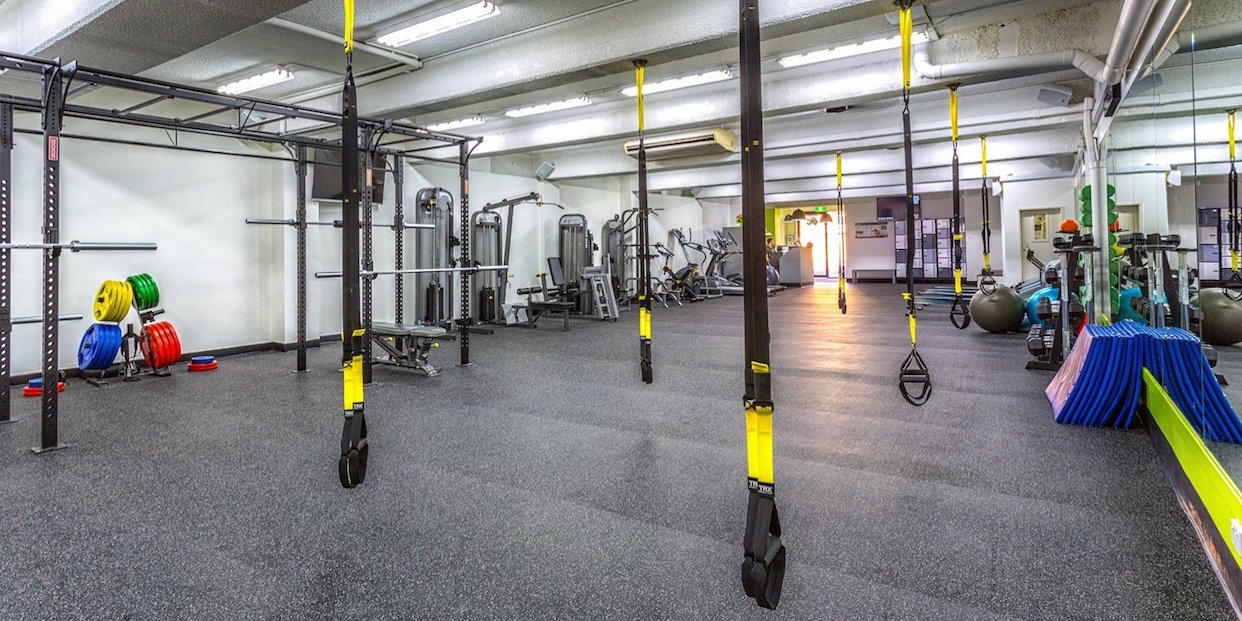
Identifying "red flags" in a fitness centre can save you significant mental energy. Look out for crowded floor plans that make navigating with mobility aids difficult, a lack of staff available for assistance, and non-inclusive language in gym signage. There is a vast difference between a "big box" commercial gym and a specialised personal training studio in Sydney. A private studio environment, like our facility in Maroubra, drastically reduces sensory and social triggers. Without the crowds and clatter of a standard gym, you can focus entirely on your form and progress. If you're ready to see how a tailored environment feels, our introductory program is a low-pressure way to test the space.
Building Mental Resilience for the Fitness Floor
Resilience isn't about ignoring your fear; it's about reframing it. Cognitive reframing involves viewing the gym as a specific tool for your goals, such as improving your independence or strength, rather than a stage for others to watch you. We recommend using "micro-goals" to build momentum. Your goal for the first session might simply be entering the building and meeting your trainer. This lowers the stakes and proves to your nervous system that the space is safe. Professional supervision is a game-changer here. Having an expert by your side reduces the fear of injury, which is a major driver of anxiety for many. When you know your movements are being monitored for safety and technical accuracy, the mental load of overcoming gym anxiety with a disability becomes much lighter.
Commercial Gyms vs. Private NDIS Studios: Which is Better for You?
Commercial gyms often feel like a numbers game. You walk in, and you're just another membership card in a sea of people. For someone focused on overcoming gym anxiety with a disability, this "big box" model is often a recipe for stress. You're left to navigate complex machinery alone while dodging large crowds. In contrast, a private training studio prioritises your specific results. At 6X Training, we focus on quality over quantity. This means you aren't fighting for equipment or feeling like you're "in the way" of other members. We believe that your environment should support your progress, not hinder it.
An NDIS Exercise Physiologist Sydney plays a crucial role in this process. They don't just count reps. They manage complex needs, from mobility restrictions to sensory sensitivities. They use clinical knowledge to ensure every movement builds your capacity safely and effectively. This level of expert guidance turns a daunting workout into a structured path toward independence. It moves you away from the "one size fits all" approach of mainstream fitness centres and toward a model that respects your unique physiology.
The Private Studio Advantage
One of the greatest benefits of a private studio is the controlled environment. We can adjust the lighting, manage the volume of background music, and ensure the right equipment is ready exactly when you arrive. You get personalised attention every single minute of your session. No more wandering around wondering how to use a machine or waiting for a specific station to clear. If you're looking for a balance between 1-on-1 support and social connection, Small Group Training in Maroubra offers a perfect middle ground. It allows for social participation and community building without the overwhelming pressure of a massive crowd.
NDIS Funding and Professional Support
Navigating the NDIS can be complex, but it's a powerful tool for your health and wellness journey. Funding under "Improved Health and Wellbeing" or "Core Supports" can often be used to fund these specialised sessions. There is a world of difference between a standard personal trainer and an NDIS-registered provider. A registered provider understands the specific compliance and reporting requirements of the scheme, which have become even more rigorous following the National Disability Insurance Scheme Amendment (Integrity and Safeguarding) Act 2026. They have the professional experience to adapt programmes for diverse needs. This professional accountability is the secret sauce for overcoming gym anxiety with a disability. It replaces uncertainty with a proven system and a reliable partner who is invested in your long-term success.
Practical Strategies to Smash Gymtimidation and Build Confidence
Smashing gymtimidation isn't about a sudden burst of courage. It's about a systematic approach to building comfort. Overcoming gym anxiety with a disability is far more achievable when you break the process into manageable phases. Start with a "recon mission." Visit the studio at a quiet time just to see the layout and where the equipment is kept. This familiarity reduces the "fear of the unknown" before you even lift a weight. Next, book an initial consult to discuss your specific disability and goals with a trainer. This conversation ensures you aren't just another face in the crowd; you're a partner in a tailored programme.
Your gear matters, but not for the reasons you might think. Wear clothing that makes you feel capable and comfortable, rather than just "athletic." If a certain fabric or fit helps you move better, that is your best gym kit. While you train, keep your "Why" at the front of your mind. Whether you want to improve your mobility in Maroubra or build the strength to play with your grandkids, an emotional anchor provides the discipline to keep showing up. Finally, utilise an introductory offer. This allows you to test the environment and the staff without a long-term commitment, giving you the freedom to ensure the space is the right fit for you.
Communicating Your Needs to Your Trainer
Advocating for yourself is a skill that builds confidence. Don't hesitate to say, "I need this exercise modified for my left side," or "Can we turn the music down today?" A high-quality trainer will always welcome your feedback. They see it as essential data to help them adapt your programme on the fly. This open communication is exactly how our members achieve such impressive client results. Seeing others with similar challenges succeed is proof that you belong in this space too.
The First 15 Minutes: Conquering the Entry
The moment you walk through the door is often the highest point of anxiety. Developing a "warm-up ritual" can ground you in the space. This might be a specific stretch or a simple breathing technique to lower cortisol levels before you touch a weight. If sensory input is a trigger, don't be afraid to use noise-cancelling headphones. Focusing on your breath and your own rhythm helps the rest of the room fade away. Overcoming gym anxiety with a disability becomes a reality when you realise you have total control over your first fifteen minutes. Once you're through the door and moving, the momentum will carry you the rest of the way.
The 6X Way: Inclusive NDIS Personal Training in Maroubra
At 6X Training, we've spent over 15 years refining a space where every individual feels they belong. We understand that overcoming gym anxiety with a disability requires more than just a ramp at the front door. It requires a culture that respects your journey and trainers who possess the technical expertise to guide you safely. Our NDIS Personal Training Maroubra services are built on this foundation. We don't just provide a facility; we offer a partnership. Our mentor-led approach means we are deeply invested in your specific health outcomes and your long-term independence. We are your partners in progress.
Located in the heart of the Eastern Suburbs, our studio serves as a sanctuary for locals from Coogee, Randwick, and Little Bay who are tired of the "big gym" grind. We've removed the mirrors and the ego to focus entirely on what works for you. By choosing a specialised environment, you bypass the sensory overload and social pressures of commercial centres. This allows you to focus on the work at hand. We believe that overcoming gym anxiety with a disability is a process of building trust in your body and your environment simultaneously.
Specialised Equipment and Expert Knowledge
Our methodology combines professional expertise with data-driven insights. We use advanced tools like the InBody Scan to track your body composition and ensure your programme is delivering real results. This isn't about guesswork. It's about science and technical accuracy. Our trainers are experts at adapting functional movements to suit your specific physical or neurological condition. Whether we're modifying a squat for better stability or adjusting a programme for neurodivergent sensory needs, we do it with precision. We invite you to visit our private facilities in Maroubra to see firsthand how we've designed a space that prioritises your comfort and safety.
Ready to Start? Your Maroubra Fitness Community Awaits
The hardest part of any fitness journey is the first step. We've made that step as low-risk and welcoming as possible. Our Maroubra studio isn't just a place to train; it's a community of like-minded individuals working toward their own version of peak health. You won't find any judgement here. You'll find a team of professionals ready to help you build the capacity and confidence you deserve. Our introductory programme is the perfect way to experience the 6X difference without any long-term pressure. Don't let another year pass feeling like an outsider in your own health journey.
Reclaim Your Strength and Independence Today
Your fitness journey shouldn't be a source of stress. We've explored how a private, inclusive environment can turn "gymtimidation" into a sense of belonging. By distinguishing between psychological barriers and environmental ones, you can take control of your training. Finding a space that prioritises your safety and independence is the most effective strategy for overcoming gym anxiety with a disability. You deserve a training partner who understands your needs and respects your goals.
As an NDIS Registered Provider with over 15 years of local experience, 6X Training is dedicated to helping Sydney's Eastern Suburbs community thrive. Our private Maroubra studio is designed to eliminate sensory overload and social pressure. We focus on results, accountability, and your specific capacity-building requirements. You have the right to feel strong, capable, and welcome in your local fitness community.
We're ready to help you take that first step toward a more empowered and physically capable future. Your community is waiting for you.
Frequently Asked Questions
Can I use my NDIS funding for personal training at 6X Training?
Yes, you can typically use your NDIS funding for our services if your plan includes "Improved Health and Wellbeing" or "Core Supports." Because we are a registered provider, we ensure your training aligns with your specific capacity building goals. This funding is a vital tool for overcoming gym anxiety with a disability by giving you access to professional, one on one guidance in a safe environment.
What if I've never been to a gym before and don't know what I'm doing?
You don't need any prior gym experience to start training with us. Our mentor-led approach is designed specifically for beginners and those who feel like outsiders in traditional fitness spaces. We take the time to teach you every movement with technical accuracy. You'll never be left wandering the floor or wondering how to use a machine on your own.
Is the 6X Training studio in Maroubra wheelchair accessible?
Yes, our Maroubra studio is a fully inclusive space designed to accommodate clients with diverse mobility needs. We've removed the physical barriers that often cause stress in commercial gyms. You can navigate our facility with confidence. Our trainers are experienced in adapting equipment and exercises to ensure every session is safe, effective, and accessible for wheelchair users.
Will people judge me if I need to do exercises differently because of my disability?
No one will judge you at 6X Training because our private environment eliminates the "fishbowl" feeling of big gyms. We prioritise a community-focused warmth where diverse bodies and movement patterns are the standard. Everyone in our studio is focused on their own progress and results. You can train with the peace of mind that your unique way of moving is respected and supported.
Do I need a referral from a doctor to start NDIS exercise physiology?
You generally don't need a doctor's referral to start NDIS Exercise Physiology, but it is always best to check your specific plan requirements. We work closely with your support team to ensure our programmes meet NDIS compliance standards. If you have complex medical needs, a quick chat with your GP can provide us with helpful data to further customise your sessions.
What should I bring to my first session at a private personal training studio?
Please bring comfortable clothing that allows you to move freely, a water bottle, and a small towel. If you're using NDIS funding, having a copy of your goals or plan can be helpful for your initial consult. We provide all the specialised equipment and data-tracking technology you'll need. Just show up ready to focus on your progress.
Can my support worker or carer come to the gym sessions with me?
Yes, your support worker or carer is more than welcome to attend your sessions with you. We value the role they play in your health journey and encourage their presence if it makes you feel more comfortable. Our studio is a collaborative space where we work together to help you build independence and physical capability.
How many sessions a week do I need to see results in my capacity building?
Most clients see significant results in their capacity building by attending two to three sessions per week. Consistency is the primary driver of progress. We'll help you establish a sustainable rhythm that fits your lifestyle and NDIS budget. This structured frequency helps in overcoming gym anxiety with a disability by making the gym a familiar and positive part of your weekly routine.
Article by
Brad Ellison
Brad Ellison is a personal trainer, weight loss coach and founder of 6X Training in Maroubra, Sydney. Since 2006, he has helped clients across the Eastern Suburbs lose weight, build strength and improve their health through personalised fitness coaching, nutrition support and accountability. His expertise includes fat loss, body composition improvement, strength training and sustainable lifestyle change.


