
What if that persistent "clumsiness" isn't a permanent part of who you are, but actually a communication breakdown between your brain and your muscles? It's deeply frustrating when simple daily tasks start to feel like a struggle, or when a sudden loss of balance makes you feel less confident moving through your own home. You aren't alone in feeling overwhelmed, especially when trying to figure out how NDIS funding fits into your recovery journey.
The good news is that improving motor skills with exercise physiology offers a structured path toward reclaiming your coordination. This isn't just about generic gym work; it's a specialised process of retraining your nervous system to move with precision and stability. By focusing on the science of movement, you can reduce your fall risk and perform everyday activities with much greater ease.
In this guide, we'll break down how professional exercise physiology transforms your physical capabilities. You'll discover how our private Maroubra studio provides a supportive environment for this work and get a clear, simple explanation of how to use your NDIS "Capacity Building" budget to fund your sessions.
Key Takeaways
- Understand how an Accredited Exercise Physiologist assesses the link between your brain and muscles to identify specific movement gaps and coordination issues.
- Learn how neuroplasticity allows you to "re-wire" your nervous system, making improving motor skills with exercise physiology a scientific reality for better daily movement.
- Discover the specialised training techniques, such as unilateral exercises and target-based tasks, used to rebuild your physical confidence and balance.
- Gain a clear understanding of how to utilise NDIS "Capacity Building" funding to access these professional therapeutic services in Sydney.
- Find out why a private, crowd-free studio in Maroubra provides the optimal environment for those with sensory sensitivities to focus on their individual progress.
What is Motor Skill Development in Exercise Physiology?
A motor skill is essentially the coordinated relationship between your brain, your nervous system, and your muscles. It's your body's ability to perform a specific task with precision and control. While many think of exercise as just "getting fit" or building big muscles, improving motor skills with exercise physiology is a more nuanced process. It focuses on the quality of how your body executes movement rather than just the quantity of work you can do. This distinction is vital for anyone struggling with coordination or balance.
An Accredited Exercise Physiologist (AEP) acts as a movement scientist who looks beyond the surface. They don't just count reps; they assess your movement patterns to see where the communication between your brain and body might be lagging. This is what we refer to as "Movement with Purpose". Every repetition in a clinical setting is designed to refine a specific neural pathway. Unlike a standard gym session that aims for a "burn", motor learning sessions aim for "clarity". We want your brain to find the most efficient way to signal your muscles, making daily tasks feel lighter and more natural.
To better understand how these principles translate into practical action, watch this helpful video:
The Difference Between Gross and Fine Motor Skills
We generally categorise movement into two distinct areas. Gross motor skills involve large muscle groups and are responsible for fundamental actions like walking, jumping, or lifting a heavy grocery bag. Fine motor skills are far more intricate. They involve the small muscles in your hands and wrists for precise tasks like writing, buttoning a shirt, or using a fork. Our EPs bridge the gap between these two by using functional movements. For example, a "reach and grasp" exercise might start as a large arm movement but end with a precise finger pinch, training your entire nervous system to work as a single, integrated unit.
For many, engaging in creative pursuits is a rewarding way to practice these intricate movements outside of the clinic; if you're looking for inspiration on how artistic workshops can support dexterity, check out Art Therapy and their range of skill-building sessions.
Why Motor Skills Decline or Fail to Develop
Several factors can disrupt these vital connections. Neurological conditions like Parkinson's or Multiple Sclerosis often interfere with the brain's signals to the limbs. Similarly, a significant injury or a long period of sedentary living can dull your "proprioception", which is your internal sense of where your body is in space. When you lose this awareness, you're more likely to trip or feel unsteady. By intervening with specialised NDIS personal training or exercise physiology, you can prevent secondary complications like chronic pain or frequent falls. This proactive approach ensures you maintain your independence and move through life with much more confidence.
The Science of the Brain-Body Connection: Neuroplasticity
The human brain isn't a static organ. It's remarkably adaptable, a characteristic known as neuroplasticity. When we talk about improving motor skills with exercise physiology, we're really discussing the process of harnessing this adaptability to create lasting physical change. Your brain possesses the incredible ability to reorganise itself by forming new neural connections throughout your entire life. This isn't just theory; it's a practical tool we use every day in the studio. By improving motor skills with exercise physiology, you aren't just getting stronger; you're getting smarter about how you move.
By engaging in repetitive, purposeful movement, you essentially "carve" new electrical pathways within your nervous system. Think of it like walking through a field of tall grass. The first time is difficult, but each subsequent trip makes the path clearer and easier to follow. This is why task-specific training is so vital. We focus on "forced use", which means we encourage the brain to re-engage with difficult movements rather than allowing the body to rely on lazy compensations. In this context, the quality of a single, perfect repetition matters far more than the quantity of weight you can lift. Precision is the primary goal.
Proprioception: Your Body’s Internal GPS
To truly understand What is Motor Skill Competence, you must understand proprioception. This is your body's "internal GPS", the sense that allows you to know exactly where your limbs are without having to look at them. It's the secret sauce of fluid movement. Common signs that your proprioception is struggling include frequently bumping into furniture, feeling unsteady on uneven footpaths, or a general sense of being "clumsy". Our Exercise Physiologists use targeted drills, such as balancing on unstable surfaces or performing movements with your eyes closed, to recalibrate these internal sensors and rebuild your physical confidence.
The Role of Feedback in Motor Learning
Your brain requires constant data to learn and refine new skills. During your sessions, an EP provides external feedback through specific verbal cues and tactile corrections. This professional guidance ensures you aren't just moving, but moving correctly. Over time, this external support helps you develop internal feedback, where you can "feel" the correct movement yourself. This is the moment a skill becomes automatic. To track these physical shifts objectively, we utilise the InBody Body Composition Scan. This allows us to monitor changes in muscle balance and symmetry, providing clear evidence of your progress alongside your functional gains.
If you're ready to start retraining your brain and body for better movement, our introductory programme offers a structured, supportive way to begin your journey.
How Exercise Physiology Improves Coordination and Balance
We move from the "re-wiring" theory into the practical application on the gym floor. Improving motor skills with exercise physiology involves a systematic breakdown of movement. Every session is structured to challenge the nervous system through specific, progressive stressors. We don't just ask you to lift; we ask you to lift while managing your centre of gravity. This might involve unilateral training, where you work one side of the body at a time to eliminate "cheating" from your stronger side. We also integrate target-based tasks that force your brain to calculate distance and force in real-time.
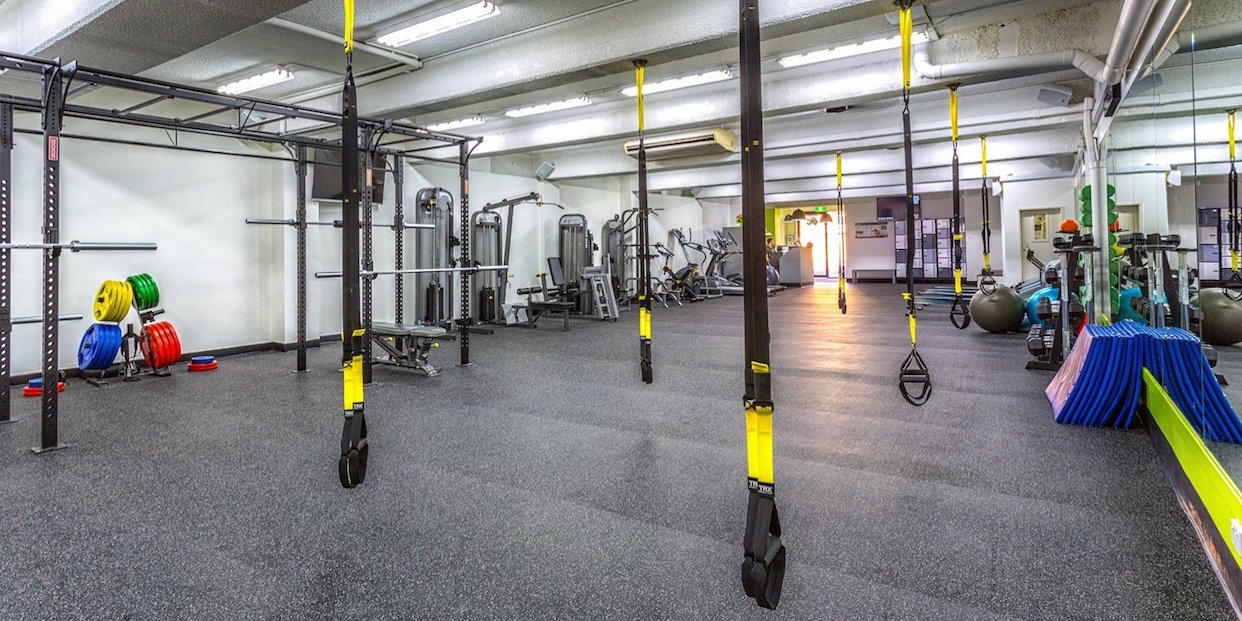
At 6X Training, we organise these sessions within our private Maroubra studio. This crowd-free environment is essential for safety and focus. When you aren't distracted by a chaotic commercial gym, your brain can fully commit to the task at hand. We explain the "why" behind every drill. Understanding that a specific foot placement is designed to wake up a dormant neural pathway increases your engagement. It also helps you see the direct link between a gym exercise and your real-world results.
Balance Training Beyond the Basics
Effective balance is more than just standing on one leg. It requires a complex integration of your visual system and your vestibular system, which are the sensors in your inner ear. Our EPs include visual tracking drills while you move to ensure your brain can process your surroundings without losing stability. We distinguish between static balance, which is staying still, and dynamic balance. Dynamic balance is the ability to maintain equilibrium while moving through the Maroubra streets. You need both to navigate uneven footpaths or crowded shops with total confidence.
Strength as a Pillar for Coordination
A weak muscle simply cannot be a coordinated muscle. If your body lacks the raw strength to hold a position, your nervous system will naturally resort to jerky, inefficient movements to compensate. We target the stabiliser muscles that standard gym workouts often neglect. These small muscles provide the foundation for your larger movements. There is a direct link between core stability and distal mobility. When your trunk is stable, your limbs are free to move with the precision needed for fine motor tasks. This integrated approach ensures your strength supports your coordination, rather than working against it.
Accessing Support: The NDIS Pathway in Sydney’s Eastern Suburbs
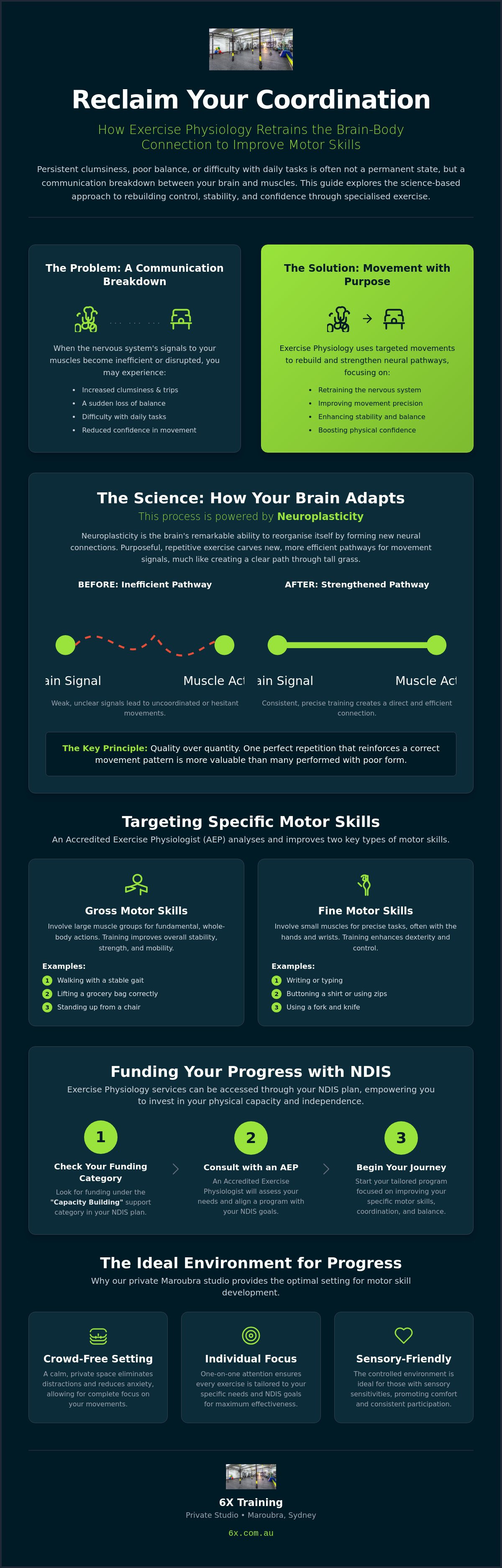
Retraining your body is a significant commitment. For many Sydney locals, the National Disability Insurance Scheme (NDIS) provides a clear pathway for funding these essential services. Improving motor skills with exercise physiology typically falls under the "Capacity Building" budget. This specific category is designed to help you develop the skills and physical strength needed to live a more autonomous life. It's about investing in your long-term ability to navigate the world without constant assistance.
Within your plan, you'll likely find two main sub-categories where an Accredited Exercise Physiologist (AEP) can provide support. "Improved Daily Living" (Therapeutic Supports) is often used when the goal is functional improvement directly related to your disability. Alternatively, "Improved Health and Wellbeing" focuses on managing the physical impacts of your condition. Finding an NDIS Personal Trainer or EP in Maroubra who understands these funding nuances is the first step toward a more coordinated future.
Professional reporting is another critical part of the process. Your EP will provide "Evidence of Support" reports for your NDIS plan reviews. These documents aren't just paperwork; they're professional records of your progress. They demonstrate to the NDIS exactly how improving motor skills with exercise physiology is meeting your stated goals. This ensures your funding continues to support your journey by proving the effectiveness of the intervention.
Capacity Building for Independence
Improving your motor skills isn't just about gym performance. It's about real-world independence. For a local resident, this might mean having the balance to walk to the shops in Randwick without fear of falling. It could be the coordination required for getting in and out of a car safely. We work closely with your Occupational Therapist (OT) and Support Coordinator to ensure every exercise aligns with your broader life goals. This collaborative approach ensures all your therapists are working toward the same outcomes, creating a seamless support network.
Why a Private Studio Matters for NDIS Clients
The environment where you train is just as important as the exercises themselves. Many of our clients find commercial gyms in the Eastern Suburbs to be overwhelming. The loud music, clanging weights, and large crowds can cause sensory overload. This makes focusing on complex motor tasks almost impossible. At 6X Training Maroubra, we offer a quiet, controlled studio environment. This lack of "gym chaos" allows you to focus entirely on your movement patterns. You'll receive the one-on-one attention necessary for safety and a tailored progression that respects your unique pace.
Starting Your Journey at 6X Training Maroubra
At 6X Training Maroubra, we believe that movement is a skill that can be refined and mastered at any stage of life. Our philosophy is built on providing expert guidance within a supportive, non-intimidating environment. We moved away from the loud, crowded gym model to create a space where you can focus entirely on your progress. When you commit to improving motor skills with exercise physiology, you're partnering with an Accredited Exercise Physiologist who acts as a results-driven mentor. They understand the complexities of the human nervous system and how to bridge the gap between where you are now and where you want to be.
Your programme is never generic. We create bespoke plans that respect your unique starting point and your specific NDIS goals. To support your physical work, we also integrate advanced recovery tools like our infrared sauna. This helps manage muscle health and supports nervous system regulation between your training sessions. The results of this structured, scientific approach are clear. You can see the tangible impact of this method by viewing the real-world transformations of our local Sydney clients.
Your First Consultation: What to Expect
Your journey begins with a comprehensive movement assessment. We don't just look at what you can't do; we identify your current baseline and the specific "gaps" in your coordination. This is also where we set meaningful goals. We want to turn a vague desire like "I want to move better" into a concrete outcome like "I want to play with my grandkids at Coogee Beach." During this session, you'll get a full walkthrough of our specialised equipment and our private training zones. This ensures you feel comfortable and confident in the space before we begin the actual work of improving motor skills with exercise physiology.
Take the First Step Today
We know that starting a new therapy programme can feel daunting. That's why we offer our Intro Offer as a low-risk entry point. It's the perfect opportunity to experience our private studio and see how our EPs work without a long-term commitment. If you have specific NDIS needs or sensory concerns, we encourage you to reach out for a casual chat. We're here to help you understand your funding and how we can best support your independence. Remember, your body is incredibly resilient. It’s never too late to retrain your brain and body to move with the precision and confidence you deserve.
Your Path to Confident Movement Starts Here
Regaining your physical confidence isn't about working harder; it's about moving smarter. You now understand how neuroplasticity allows for real, lasting change in how your nervous system communicates with your muscles. By improving motor skills with exercise physiology, you can transition from feeling unsteady to moving with precision and ease. This scientific approach ensures every repetition counts toward your long-term independence.
Whether you're navigating the NDIS "Capacity Building" pathway or simply want to reduce your fall risk, the right environment makes all the difference. Our specialised private studio provides the quiet focus needed for these complex tasks, far removed from the chaos of a standard commercial gym. With over 15 years serving the Maroubra community, 6X Training is a proud NDIS Registered Provider dedicated to helping you reclaim your balance and mobility.
It’s time to stop letting clumsy movements hold you back and start retraining your body for the active life you want to lead. We look forward to welcoming you into our supportive community and helping you take that first vital step toward better movement.
Frequently Asked Questions
Can exercise physiology help adults with lifelong coordination issues?
Yes, adults can definitely see significant progress even if they've struggled with coordination their entire lives. Because the brain remains adaptable throughout adulthood, improving motor skills with exercise physiology focuses on creating new neural pathways to replace old, inefficient movement patterns. We use specific, repetitive drills to help you move with more confidence and less frustration in your daily life. It's about retraining your nervous system to find better ways to function.
How is an Exercise Physiologist different from a Physiotherapist?
An Exercise Physiologist focuses on long-term functional movement and exercise-based rehabilitation rather than manual therapy or massage. While a Physiotherapist often treats acute injuries in the early stages, an EP uses "movement as medicine" to manage chronic conditions and build physical capacity. We design structured programmes that help you move better and stay active for the long term. Both professionals often work together to ensure you get a holistic recovery experience.
Does NDIS funding cover the full cost of exercise physiology sessions?
Yes, NDIS funding typically covers the cost of these sessions if they are included in your plan under "Capacity Building" categories. Most participants use their "Improved Daily Living" or "Improved Health and Wellbeing" budgets to access these services. It's always best to check your specific plan goals with your Support Coordinator to ensure your funding aligns with these therapeutic supports. Our team can help you navigate these details during your initial chat.
How long does it take to see improvements in motor skills?
You'll often notice small neural adaptations within the first few weeks of consistent training. However, lasting structural changes and true motor learning typically take between eight to twelve weeks of regular practice. Everyone's journey is different, but consistency is the most important factor for success. We track your progress using objective data to ensure you're always moving in the right direction and meeting your functional goals.
What should I wear to my first exercise physiology session in Maroubra?
You should wear comfortable, breathable activewear that allows you to move freely through a full range of motion. It's also essential to wear enclosed sports shoes with good grip to ensure your safety during balance and coordination drills. Since our Maroubra studio is a private, temperature-controlled environment, you don't need to worry about heavy outdoor gear. Just bring a water bottle and a positive attitude, we'll take care of the rest.
Can I do exercise physiology if I have a severe physical disability?
Yes, Exercise Physiologists are university-trained specialists specifically qualified to work with complex and severe disabilities. We customise every movement to suit your current physical abilities and ensure your safety at all times. Our private studio environment is particularly helpful for those with mobility concerns, as it provides a quiet space without the obstacles found in commercial gyms. We focus on what you can do and build from there to improve your independence.
Is a referral from a GP necessary for exercise physiology?
No, you don't strictly need a GP referral to start as a private client or under an NDIS plan. You can reach out to us directly to begin your journey. However, if you're looking to claim a rebate through a Medicare Chronic Disease Management plan, a referral from your GP will be required. Many of our clients find that having their GP involved helps create a more coordinated approach to their overall health and wellness.
Article by
Brad Ellison
Brad Ellison is a personal trainer, weight loss coach and founder of 6X Training in Maroubra, Sydney. Since 2006, he has helped clients across the Eastern Suburbs lose weight, build strength and improve their health through personalised fitness coaching, nutrition support and accountability. His expertise includes fat loss, body composition improvement, strength training and sustainable lifestyle change.


