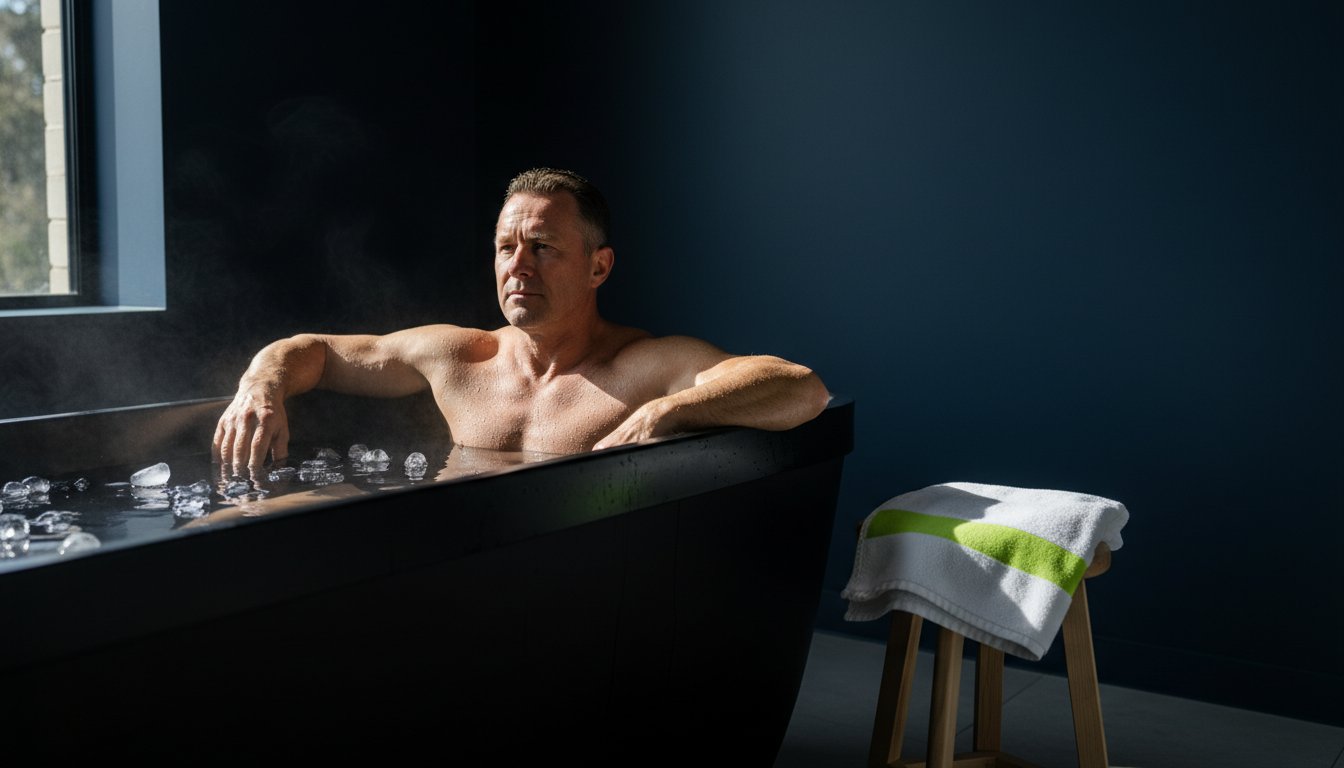
What if that thirty-second blast of cold water at the end of your morning rinse is doing more for your electricity bill than your muscle recovery? We've all seen the conflicting advice on social media, leaving many people unsure whether they should stick to the bathroom or head to a dedicated wellness centre. When you're weighing up an ice bath vs cold shower, the choice usually comes down to whether you want a quick wake-up call or a genuine physiological shift in how your body repairs itself.
You likely already know that cold therapy is a powerful way to manage stress and improve mental clarity, but the difference between surface-level exposure and full immersion is massive. This article will help you discover the scientific differences between these methods so you can choose the most effective recovery tool for your fitness goals. We'll explore why the "Mammalian Dive Reflex" makes the ice bath a superior neurological tool compared to a standard shower; we'll also provide a clear protocol to help you crush that arvo slump and bounce back faster between training sessions.
Key Takeaways
- Understand why the Mammalian Dive Reflex requires full submersion of your face and neck to unlock the deepest neurological and recovery benefits.
- Resolve the ice bath vs cold shower debate by learning how hydrostatic pressure assists in flushing metabolic waste after a heavy training session.
- Discover the specific protocols that trigger a sustained dopamine release; helping you manage stress and maintain mental clarity throughout the day.
- Follow a simple, step-by-step plan to level up from a quick cold finish in your home bathroom to a professional-grade recovery experience.
- Learn how pairing an infrared sauna with an ice bath can accelerate your results through the "Fire and Ice" contrast therapy method.
Understanding Cold Water Immersion (CWI): More Than Just a Trend
Cold water isn't just a way to wake up on a sluggish Monday morning. It's a deliberate, systemic stressor designed to trigger a specific biological response. Known formally as Cold-Water Immersion, this practice involves submerging the body in water typically below 15 degrees Celsius to elicit profound health benefits. While it may feel like a modern fitness craze, the roots of this practice stretch back to ancient civilisations. The Greeks and Romans used cold plunges for vitality; today, Maroubra athletes use them to stay at the top of their game. It's a transition from ancient wisdom to modern, data-backed science.
As we look at the ice bath vs cold shower debate, it's important to understand that both methods aim to achieve the same thing: resilience. One is a convenient daily habit, while the other is a high-intensity recovery tool. Choosing between them depends on your specific goals. You might be chasing faster muscle repair after a heavy lifting session. You might simply be trying to sharpen your mental focus for a big day at the office. Both have a place in a well-rounded wellness routine, but they operate on different levels of physiological intensity.
The Rise of Recovery Culture in Sydney
Walk through Sydney's Eastern Suburbs at 6:00 am and you'll see a distinct shift in how people start their day. Locals are increasingly ditching their second cup of coffee for a cold plunge. This isn't just about following a social media trend; it's about a high-performance lifestyle that prioritises longevity over quick fixes. Recovery has become the missing pillar of fitness for many. At 6X Training, we often start by assessing a client's baseline with an InBody 570 Body Composition Scan before layering in advanced recovery like ice baths. We integrate these protocols into our personal training programmes because we know that you can only train as hard as you can recover. It's about moving away from the "no pain, no gain" mentality toward a more structured, sustainable approach to wellness.
Hormesis: Why We Seek the Shiver
The secret to cold therapy lies in a concept called hormesis. This is the biological process where a brief, controlled exposure to a stressor actually makes the body stronger and more resilient. When you step into the cold, your body undergoes cellular repair and triggers mitochondrial biogenesis. You are essentially creating more "power plants" within your cells to produce energy more efficiently. Hormesis is a biological advantage for longevity that allows the body to adapt to stress by strengthening its internal repair mechanisms. By choosing between an ice bath vs cold shower, you are deciding the specific dose of this beneficial stress you want to apply to your system for maximum effect.
The Science of Submersion: Why Showers and Baths Aren't Equal
While both methods involve cold water, the physiological impact of an ice bath vs cold shower is fundamentally different. It's the difference between standing in a light rain and being completely enveloped by the ocean. Total immersion changes how your nervous system and circulatory system respond to the cold. To get the most out of your recovery, you need to understand that surface-level exposure simply cannot replicate the deep systemic effects of being fully submerged.
The Mammalian Dive Reflex Explained
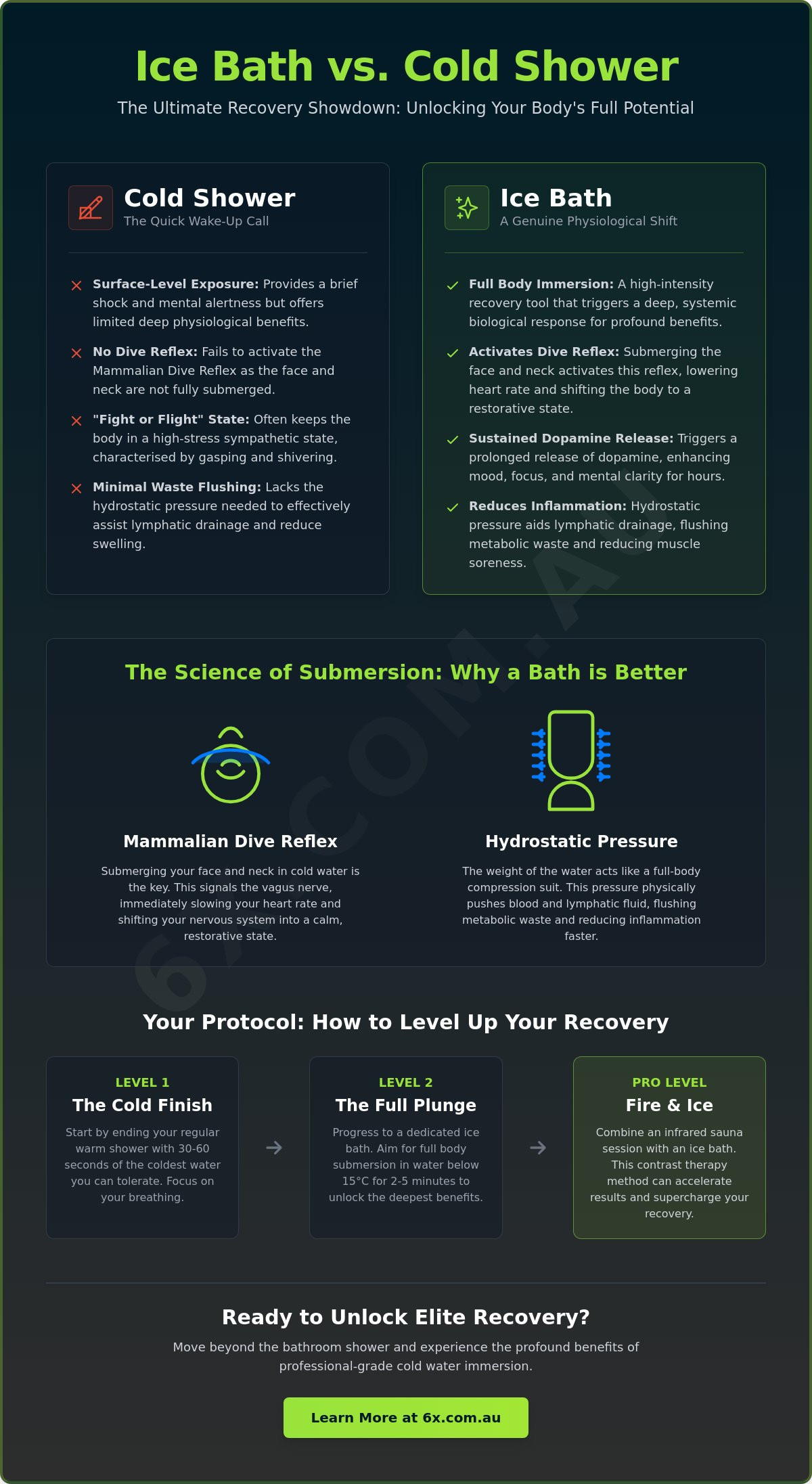
To trigger the deepest recovery benefits of cold therapy, you need to activate the Mammalian Dive Reflex. This happens when the face and neck are submerged in cold water, sending an immediate signal to the vagus nerve to lower your heart rate. Showers, by contrast, often keep the body in a sympathetic "fight or flight" state. You're shivering and gasping, but the lack of full submersion means you miss that instant shift into a parasympathetic, restorative state. Recent scientific research on cold-water immersion suggests that this neurological shift is key to managing long-term stress and improving sleep quality.
Hydrostatic Pressure and Lymphatic Drainage
When you step into a tub, the weight of the water acts like a gentle, full-body compression suit. This is known as hydrostatic pressure. It physically "squeezes" your limbs, encouraging blood flow back toward the heart and assisting the lymphatic system in moving fluid. This process is vital for reducing swelling and flushing out metabolic waste products after a heavy training session. Showers lack the physical pressure required for significant lymphatic return. Without that external force, you're relying solely on your own circulation to clear out the waste from your muscles. If you're serious about your results, you might want to experience our structured recovery sessions to feel the difference for yourself.
The Sydney Temperature Reality Check
We need to be honest about the limitations of home recovery in Australia. In the height of a Sydney summer, tap water in suburbs like Coogee or Maroubra can hover around 20°C. While that feels refreshing after a run, it sits well above the "therapeutic zone" of 10-15°C required for true physiological change. To get the most out of an ice bath vs cold shower, temperature control is non-negotiable. Achieving the necessary temperature in a shower is almost impossible in January without a specialised chiller system. An ice bath allows for precision, ensuring you actually hit the temperatures needed to trigger mitochondrial biogenesis and systemic inflammation reduction.
Ice Bath vs Cold Shower: Direct Benefits Comparison
Choosing between an ice bath vs cold shower isn't about deciding which is "good" and which is "bad." It's about matching the right tool to your specific recovery goals. While a cold shower is a fantastic daily habit for general wellness, the ice bath is a high-performance intervention. If you're looking for a quick way to shake off morning grogginess, the shower is your best mate. However, if you've just finished a heavy session at our Maroubra studio and want to minimise muscle soreness, the bath is the clear winner.
Muscle Recovery and Performance
When it comes to reducing Delayed Onset Muscle Soreness (DOMS), the ice bath is significantly more effective. The combination of lower temperatures and full immersion allows the cold to penetrate deeper into the muscle tissue, halting the inflammatory cascade that causes pain. A cold shower acts more like a surface-level stimulant; it improves circulation and wakes up the nervous system, but it lacks the thermal mass to cool the core muscle temperature effectively.
For those focused on long-term progress, it's vital to ensure your recovery protocols aren't just making you feel better, but actually protecting your hard-earned gains. We often use InBody scans to help our clients track their muscle mass and cellular health over time. This data-driven approach allows us to see if your recovery strategy is actually supporting muscle preservation or if we need to adjust your protocol. Consistent ice bathing can be a key component in maintaining that high-performance edge between training sessions.
The Neurochemical Edge
The mental benefits of cold therapy are perhaps even more impressive than the physical ones. Research suggests that cold water immersion can trigger a spike in dopamine levels of up to 250%. Unlike the fleeting "hit" you might get from a cup of coffee or a scroll through social media, the dopamine release from an ice bath is sustained. It rises gradually and stays elevated for several hours, providing a calm, focused energy that can carry you through a busy arvo.
There's also the "grit" factor to consider. Stepping into a tub of 10-degree water requires a level of mental discipline that a shower simply doesn't demand. You're training your brain to stay calm under stress, a skill that translates directly to your performance in the gym and your resilience in daily life. While a shower is a great "on-ramp" for building this mental toughness, the ice bath is the ultimate testing ground for your mindset.
Finally, we can't ignore the metabolic impact. Exposure to extreme cold activates brown adipose tissue, also known as "brown fat." This type of fat burns calories to generate heat, which can assist with metabolic health and weight management. While both methods provide some level of activation, the total envelopment of an ice bath creates a much stronger thermogenic response, making it a more powerful tool for those looking to optimise their body composition.
The Protocol: How to Start and When to Level Up
Starting a cold therapy routine doesn't mean jumping into a frozen lake on day one. It's about building a sustainable habit that your body can actually handle. When debating the merits of an ice bath vs cold shower, the best approach is a structured progression that allows your nervous system to adapt over time. We recommend a four-step pathway to move from a casual interest to a disciplined, professional-grade recovery practice.
Begin by mastering the 30-second cold finish. Simply turn the tap to cold at the end of your normal morning shower. It sounds easy, but the mental discipline required to stay under that stream is your first real win. Once you can manage this for a week without gasping, move to the "Face Dip." Submerge your face in a bowl of icy water for 15 to 30 seconds several times a day. This specifically targets the receptors that trigger the dive reflex, preparing your brain for the sensation of full-body immersion without the initial shock of a full plunge.
Your first 11°C ice bath session will be a significant step up. You should expect an initial "gasp" response and a strong urge to climb out immediately. This is perfectly normal. Your goal isn't to stay in for as long as possible; it's to reach the "Minimum Effective Dose." Current scientific consensus suggests that a total of 11 minutes of cold exposure per week, spread across two or three sessions, is the sweet spot for metabolic and recovery benefits. You don't need to suffer for twenty minutes at a time to see results.
Breathwork: Your Secret Weapon Against the Cold
Breathwork is the tool that turns a stressful experience into a meditative one. We teach the "Box Breathing" technique to our Maroubra clients: inhale for four seconds, hold for four, exhale for four, and hold for four. This specific rhythm signals safety to your brain and helps override the panic response. You should never hold your breath when first entering the ice. A sharp, forced breath-hold can increase internal pressure and heighten the shock response. Focus on long, controlled exhales to keep your heart rate steady and your mind focused.
Safety First: When to Avoid the Cold
While cold therapy is generally safe for most people, there are clear contraindications you must respect. If you have a history of heart conditions or Raynaud’s disease, you should consult your GP before starting any cold immersion protocol. The "Cold Shock Response" can be intense in unmonitored environments, which is why we always recommend professional supervision for your first deep plunge. It's about being smart, not just being tough. Ready to move beyond the bathroom? Start your recovery journey with our structured introductory program.
The 6X Recovery Experience: Ice Baths and Beyond in Maroubra
We brought a dedicated ice bath to our Maroubra studio because we saw a massive gap in the local fitness scene. While many of our members were already experimenting with the ice bath vs cold shower at home, they were often frustrated by the lack of consistency. It's difficult to reach the therapeutic "gold standard" of 10 to 12 degrees Celsius in a standard Sydney bathroom, especially during the humid summer months. We've removed that friction by providing a professional-grade environment where temperature control and hygiene are handled for you. This allows you to step out of your training session and straight into a recovery protocol that actually works.
Our trainers don't just point you toward the tub; they integrate cold therapy into your personalised fitness plan. We look at your training volume, your stress levels, and your specific goals to determine the optimal timing for your plunges. Whether you're preparing for a local surf competition or simply trying to stay active for your family, having a structured recovery strategy is what separates those who burn out from those who thrive. It's about building a body that's resilient enough to handle whatever life throws at it.
Fire and Ice: The Infrared Sauna Connection
The real magic happens when you combine extreme heat with extreme cold. This "Fire and Ice" protocol is a cornerstone of our recovery suite in Maroubra. By moving from our Infrared Sauna directly into the cold plunge, you create a powerful vascular flush. The heat dilates your blood vessels and encourages sweating, while the cold causes them to constrict instantly. This rhythmic "squeezing" of the circulatory system accelerates the removal of metabolic waste and dramatically improves blood flow to tired muscles. For a deeper look at the science behind this, read our guide on Infrared Sauna Benefits for Recovery. Our members find this contrast therapy is the ultimate way to reset after a high-intensity week.
Data-Driven Recovery
At 6X Training, we value data over guesswork. We use InBody 570 scans to monitor your body composition and cellular health over time. This technology allows us to see the real-world results of your hard work and ensure your recovery protocols are protecting your muscle mass. Proper recovery prevents the systemic inflammation and "burnout" that often stalls fat loss and leads to plateaus. By balancing your ice bath vs cold shower usage with expert guidance, you'll find it much easier to stick to a routine that delivers visible changes. Don't leave your progress to chance. Join the 6X community and book your first session today to start training and recovering with purpose.
Take Control of Your Recovery Routine Today
Deciding between an ice bath vs cold shower doesn't have to be a guessing game. While a cold shower is a fantastic way to build mental discipline and shake off morning fatigue, it cannot match the deep physiological shifts triggered by full submersion. By mastering the Mammalian Dive Reflex and leveraging hydrostatic pressure, you can move beyond surface-level cooling to achieve genuine muscle repair and a sustained neurochemical high. It's about choosing the right tool for the results you actually want to see in your training and your life.
At 6X Training, we've been Sydney's premier results-driven studio since 2011. Our expert trainers understand the science of recovery and are here to help you implement a protocol that actually sticks. With state-of-the-art Infrared Sauna and Ice Bath facilities, we provide everything you need to transition from home-based habits to professional-grade performance. Stop wondering if your recovery is working and start seeing the data for yourself.
Ready to experience the difference? Book your Ice Bath and Sauna recovery session at 6X Training Maroubra and take the first step toward a more resilient version of yourself. You've done the hard work in the gym; now it's time to give your body the expert care it deserves.
Frequently Asked Questions
Is a cold shower as good as an ice bath for fat loss?
An ice bath is significantly more effective for fat loss than a cold shower. When comparing an ice bath vs cold shower for body composition, the full immersion of a bath creates a much higher metabolic demand. This intense cold triggers the activation of brown adipose tissue, which burns calories to generate heat and maintain your core temperature. A shower finish is excellent for a quick energy boost, but it lacks the thermal mass required for significant fat-burning benefits.
How long should I stay in an ice bath compared to a cold shower?
You should aim for 2 to 5 minutes in an ice bath, whereas a 30 to 90-second cold finish is usually enough for a daily shower. The key is to reach a total of 11 minutes of cold exposure per week across several sessions. This "minimum effective dose" ensures you get the recovery benefits without overstressing your central nervous system. It's better to be consistent with shorter, controlled sessions than to push for extreme durations that you can't maintain.
Can I do an ice bath every day, or is that too much?
You can certainly ice bath every day, but it's not always necessary for the average person. Most of our members find that 2 to 3 sessions per week provide the best balance of recovery and performance results. If you are training at a very high intensity, daily sessions might help manage inflammation. However, you should always listen to your body and skip a day if you're feeling particularly run down or unwell.
Should I take a cold shower immediately after a workout?
A cold shower immediately after a workout is great for mental clarity and lowering your heart rate, but you should be strategic about your timing if you want to build muscle. Research suggests that extreme cold right after a strength session can blunt the inflammatory response needed for hypertrophy. If your primary goal is muscle growth, we recommend waiting at least 4 to 6 hours after lifting before jumping into the cold water.
What is the best temperature for a cold plunge?
The optimal temperature for a cold plunge is between 10°C and 15°C. This "therapeutic zone" is cold enough to elicit a strong physiological response, such as mitochondrial biogenesis and the dive reflex, while remaining safe for most healthy adults. You need to hit these specific temperatures to get the best results from an ice bath vs cold shower. Our Maroubra studio maintains our baths in this precise range to ensure every session is effective and consistent.
Will cold water immersion help with my NDIS exercise goals?
Cold water immersion can be a valuable tool for achieving NDIS exercise goals, particularly for managing chronic inflammation or regulating the nervous system. Our NDIS Exercise Physiology and Personal Training teams can help you integrate cold therapy into a structured plan tailored to your specific needs. It's an excellent way to improve circulation and support overall physical resilience in a safe, supervised, and controlled environment.
Do I need to put my head under the water during an ice bath?
You don't need to keep your head submerged the whole time, but a quick dip or wetting your face and neck is highly recommended. This action is what triggers the Mammalian Dive Reflex, allowing your heart rate to drop and your body to enter a restorative, parasympathetic state. Most people find that a quick "face dip" at the start of the session is the best way to unlock the deepest neurological benefits of the cold.
Article by
Brad Ellison
Brad Ellison is a personal trainer, weight loss coach and founder of 6X Training in Maroubra, Sydney. Since 2006, he has helped clients across the Eastern Suburbs lose weight, build strength and improve their health through personalised fitness coaching, nutrition support and accountability. His expertise includes fat loss, body composition improvement, strength training and sustainable lifestyle change.


