What if your NDIS plan could do more than just manage your disability and actually empower you to rediscover what your body is capable of? We know that deciphering the latest NDIS Pricing Schedule often feels like a full-time job. It is common to feel stuck between confusing budget categories and "standard" gyms that simply aren't built for your specific journey. If you've been wondering how to use NDIS funding for personal training, you aren't alone. Many participants struggle to prove that exercise is "reasonable and necessary" for their goals, yet the right program is a vital tool for building functional independence and community participation.
This guide simplifies the entire process for 2026. We will show you exactly how to leverage your Capacity Building budget to fund expert-led sessions that focus on your long-term health and mobility. You'll learn how to navigate the latest Support Item numbers and gain the confidence to discuss your fitness goals with your Plan Manager. From understanding the "Improved Health and Wellbeing" category to finding a private, sensory-friendly studio in Maroubra, we've mapped out the clear path you need to move forward with purpose and results.
Key Takeaways
- Understand why the NDIS generally excludes standard gym memberships while supporting goal-specific training that builds your functional independence.
- Learn to identify the correct budget category within your plan, specifically targeting the "Improved Health and Wellbeing" sub-category under Capacity Building.
- Discover exactly how to use NDIS funding for personal training by aligning your fitness journey with the NDIA's "reasonable and necessary" criteria.
- Find out how to collaborate with results-oriented mentors who specialise in NDIS reporting and provide a private, supportive studio environment in Maroubra.
Can You Use NDIS Funding for Personal Training?
The short answer is a definitive yes. However, understanding how to use NDIS funding for personal training requires a clear distinction between a general "membership" and "individual support." The National Disability Insurance Scheme is designed to fund the specific supports that help you overcome barriers related to your disability. It isn't a general fitness subsidy. To access this funding, your training must be a direct vehicle for achieving the goals outlined in your plan. Results matter, and the NDIA wants to see that your budget is being used to create tangible improvements in your life.
Gym Membership vs. Personal Training Support
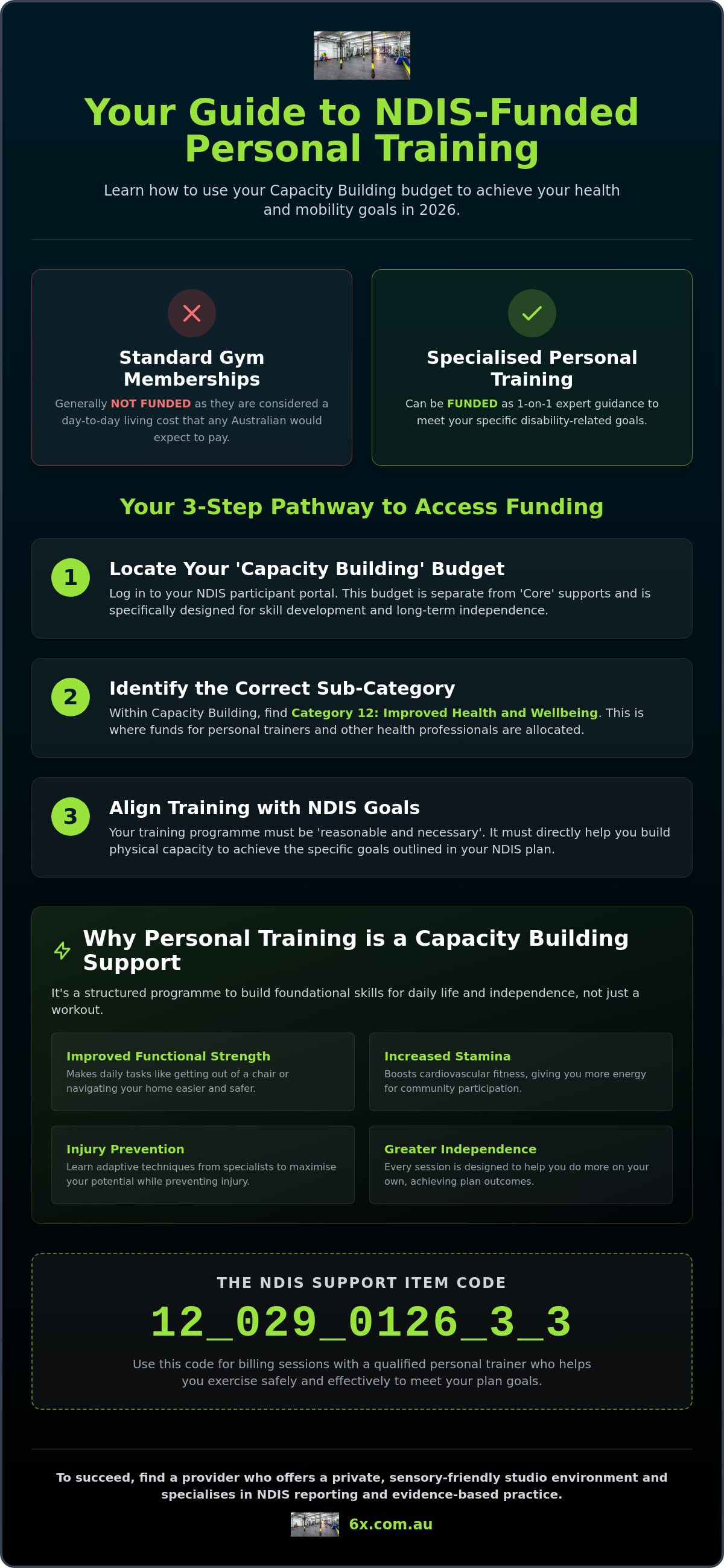
Most participants are surprised to learn that the NDIS usually excludes "day-to-day living costs." This includes the standard entry fee or membership cost of a commercial gym. These are considered costs that any Australian, with or without a disability, would expect to pay. You will typically need to cover these out-of-pocket or look for community-based programs.
The funding shifts when you look at the professional support required to exercise safely and effectively. The NDIS covers the cost of a qualified professional, such as a personal trainer, who provides the 1-on-1 guidance necessary to meet your disability-related goals. This is where the "reasonable and necessary" criteria come into play. If your disability makes it impossible to exercise without a specialist's help, that support becomes a fundable item. It's about the expertise provided, not just the space where you train.
Why Personal Training is a Capacity Building Support
In the NDIS framework, Capacity Building is about learning new skills and increasing your functional independence. Physical strength is rarely just about aesthetics; it is a foundational skill for daily life. When you build core strength, you improve your ability to transfer from a chair or navigate your home. When you improve your cardiovascular fitness, you increase your stamina for community participation. This is exactly how to use NDIS funding for personal training effectively: by linking physical gains to real-world independence.
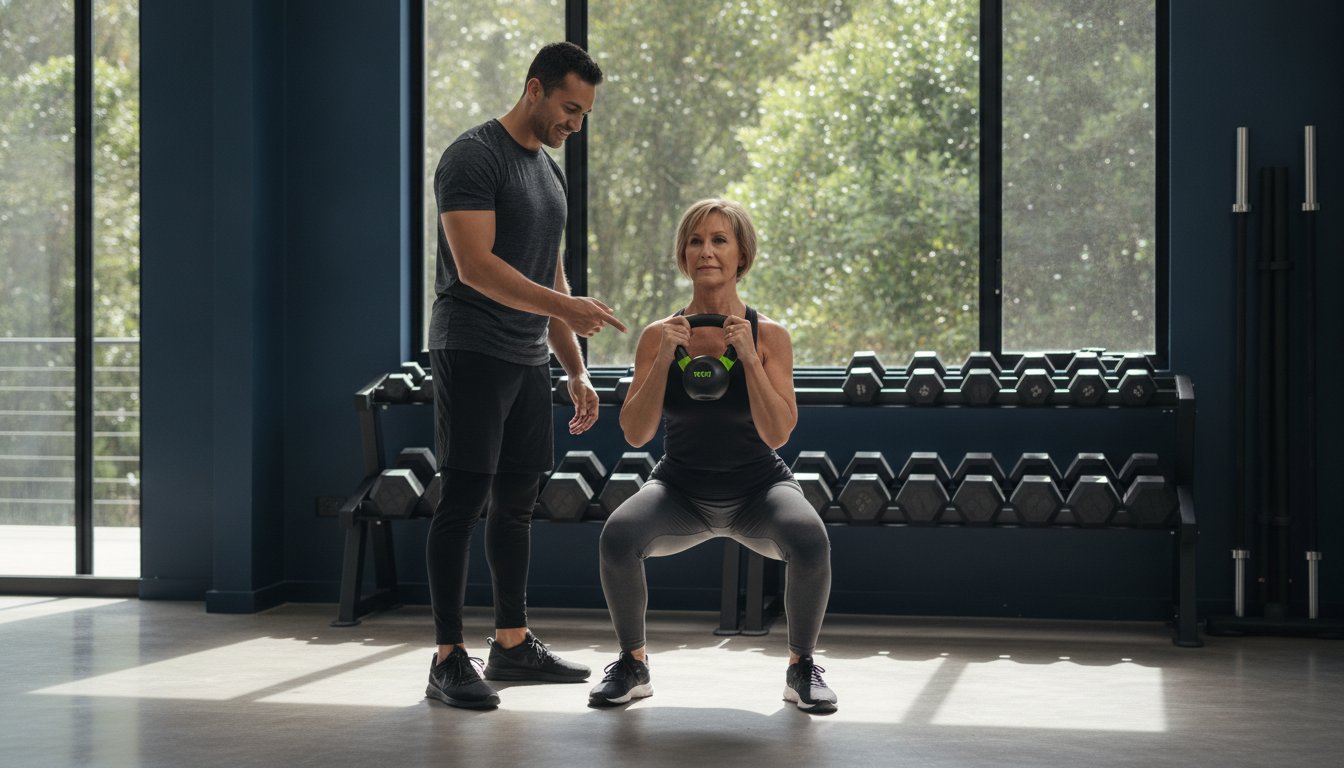
Professional guidance is essential for this transformation. Specialised NDIS personal training ensures you use adaptive techniques that prevent injury while maximising your physical potential. This isn't just a workout. It is a structured programme designed to help you do more on your own. By working with a mentor who understands NDIS reporting and evidence-based practice, you ensure every session moves you closer to the outcomes defined in your plan.
Identifying the Correct NDIS Budget Category
Log in to your NDIS participant portal. This is the starting point for anyone learning how to use NDIS funding for personal training. You need to look beyond your "Core" budget and find the section dedicated to long-term growth. Most exercise-based supports are housed within the NDIS Capacity Building Supports budget. This specific part of your plan is designed to help you build the skills and physical capacity required to live more independently.
Within Capacity Building, you are looking for Category 12: Improved Health and Wellbeing. This sub-category is specifically ring-fenced for activities that improve your physical health. It covers services from dietitians, exercise physiologists, and personal trainers. If you see an allocation here, you already have the framework in place to begin your training journey. If this category is empty, you may need to discuss your physical goals at your next plan review to have funds shifted or added.
Improved Health and Wellbeing vs. Core Supports
A common point of confusion is trying to use Core Supports for fitness. Core funds are generally for immediate, everyday needs like consumables or assistance with daily life. You cannot usually use these funds for a personal trainer without a formal plan change. Capacity Building funds are more targeted. They are flexible within the sub-category, meaning if you have a budget for "Improved Health and Wellbeing," you can often choose how to distribute that between nutrition and exercise support. In some cases, if your goals are therapeutic, you might also find support under Category 15, known as Improved Daily Living.
Support Item Codes for Personal Training
When it comes to billing, the NDIS uses specific codes to ensure the right service is being provided. For personal training, the relevant support item code is 12_029_0126_3_3. This code is used for sessions provided by a qualified trainer to help you exercise safely. It is important to note that billing rates differ between a Personal Trainer and an Exercise Physiologist. While both can help you reach your goals, an Exercise Physiologist often works with more complex clinical needs and operates under a different price limit.
At 6X Training, we understand the nuances of these codes. We work alongside you to identify which service best fits your specific budget and physical requirements. If you're unsure about your current allocation or how to get started, our team can help you review your plan during an introductory program designed to set you on the right path. We ensure your training is not just a workout, but a strategic use of your NDIS budget to achieve lasting results.
Meeting the 'Reasonable and Necessary' Criteria
The NDIA applies a specific set of rules to every funding request. To successfully navigate how to use NDIS funding for personal training, you must demonstrate that the support is both reasonable and necessary. This means the training must directly relate to your disability and be likely to improve your life in a way that is cost-effective. According to the AUSactive NDIS Guidelines, the support must be evidence-based. It cannot be something that the general public would pay for out of their own pocket, like a basic gym membership, which we discussed in previous sections.
Value for money is a major pillar of these criteria. The NDIA looks at whether a personal trainer is the most efficient way to achieve your goals compared to other, more expensive therapies. If your goal is to maintain physical function or increase community access, a 1-on-1 trainer in a private studio often represents a smarter investment than ongoing clinical interventions. It is also essential to show that this support doesn't replace what a doctor or your family should provide. It is about building your own capacity, not just receiving care.
Linking Fitness to Your NDIS Goals
Your NDIS plan is built around specific life outcomes. When you are explaining how to use NDIS funding for personal training to your Plan Manager, you must connect the dots. For instance, if your goal is "independent transfers," a trainer focuses on building the core strength and leg power required to move safely from a chair to a bed. If your goal is "social and community participation," regular sessions in a supportive environment help you build the physical stamina needed to stay out longer and engage with your local area. A professional trainer acts as a bridge to the community by providing the structured environment needed to reduce social anxiety and build confidence in public spaces.
Exercise Physiology vs. Personal Training
Choosing between a Personal Trainer and an Exercise Physiologist (EP) depends on your clinical needs. An EP is a university-qualified professional who manages complex medical conditions through movement. If you are recovering from a major surgery or have a highly unstable condition, an EP is the appropriate choice. You can find more detail in our guide on NDIS Exercise Physiologist Sydney.
However, for many participants, a Personal Trainer is the more cost-effective and practical option for long-term functional gains. Trainers at 6X focus on the "doing" part of your journey. We help you implement the movements that lead to a stronger, more capable version of yourself. If your condition is stable and your focus is on building strength and independence, a trainer offers a results-oriented approach that fits perfectly within the Improved Health and Wellbeing budget.
How to Organise Your NDIS Personal Training Sessions
Setting up your sessions doesn't have to be a bureaucratic headache. Once you understand how to use NDIS funding for personal training, the logistics become a straightforward five-step process. We focus on removing the friction so you can spend more time training and less time worrying about paperwork. Following a structured path ensures your funding is secure and your training is effective from day one.
- Step 1: Review your plan. Confirm you have an allocation in the "Improved Health and Wellbeing" category. If you've followed the advice in section two, you'll already know exactly where to look in your portal.
- Step 2: Choose a specialist provider. Look for a studio that understands NDIS reporting requirements. 6X Training in Maroubra has been operating since 2011, providing the results-driven mentorship and private environment that participants need.
- Step 3: Conduct an initial consultation. This is where we establish your baseline. We discuss your disability-specific goals and how we will measure success over the coming months.
- Step 4: Formalise the Service Agreement. This document is essential for NDIS compliance. It outlines the costs, the support item codes used, and our commitment to your goals.
- Step 5: Begin and track. Start your sessions and let us handle the progress tracking. We provide the data you need for your next plan review to prove the training is working.
Self-Managed vs. Plan-Managed Procedures
The way you pay for your sessions depends on how your plan is managed. If you are self-managing, you pay the studio directly and then claim the funds back through the NDIS portal using your receipts. This offers the most flexibility. For plan-managed participants, the process is even simpler. We send the invoices directly to your Plan Manager, who pays them from your budget. 6X Training is a preferred choice for plan-managed participants across Sydney because we provide clear, compliant invoicing that plan managers can process without delay. For those who also manage a company and want that same level of professional financial clarity, you can visit KHT Accounting & Wealth to learn about their business accounting services.
Creating a Service Agreement
A Service Agreement is a vital safeguard. It must include the specific support item codes, such as 12_029_0126_3_3, along with clear cancellation policies and a breakdown of costs. This document ensures everyone is on the same page regarding your "reasonable and necessary" supports. By clearly linking your training to your NDIS goals within the agreement, you create a paper trail of success. If you are looking for a partner who understands these requirements, explore our NDIS Personal Training Maroubra services to see how we structure our agreements for your protection.
Ready to take the first step toward your independence? Start with our introductory program to see how we can tailor a plan to your specific needs and NDIS budget.
Why 6X Training is the Right Choice for NDIS Participants
Finding a facility that understands the intersection of disability support and high-level fitness is often a challenge. At 6X Training, we have spent over a decade refining a results-oriented approach that prioritises your functional independence. When you are looking at how to use NDIS funding for personal training, you need more than just a trainer. You need a mentor who understands how to translate physical effort into life-changing autonomy. Our studio in Maroubra serves as a dedicated hub for participants from Coogee to Randwick who are ready to move beyond the limitations of standard commercial gyms.
We know that maintaining your funding requires proof of progress. Our team provides the detailed documentation and progress tracking necessary for your NDIS plan reviews. We don't just count reps. We track functional improvements that show your Plan Manager exactly how to use NDIS funding for personal training to achieve your goals. This accountability ensures your budget is viewed as a vital investment in your capacity building rather than a discretionary expense. We handle the reporting side so you can focus entirely on your physical transformation.
A Supportive Environment in Maroubra
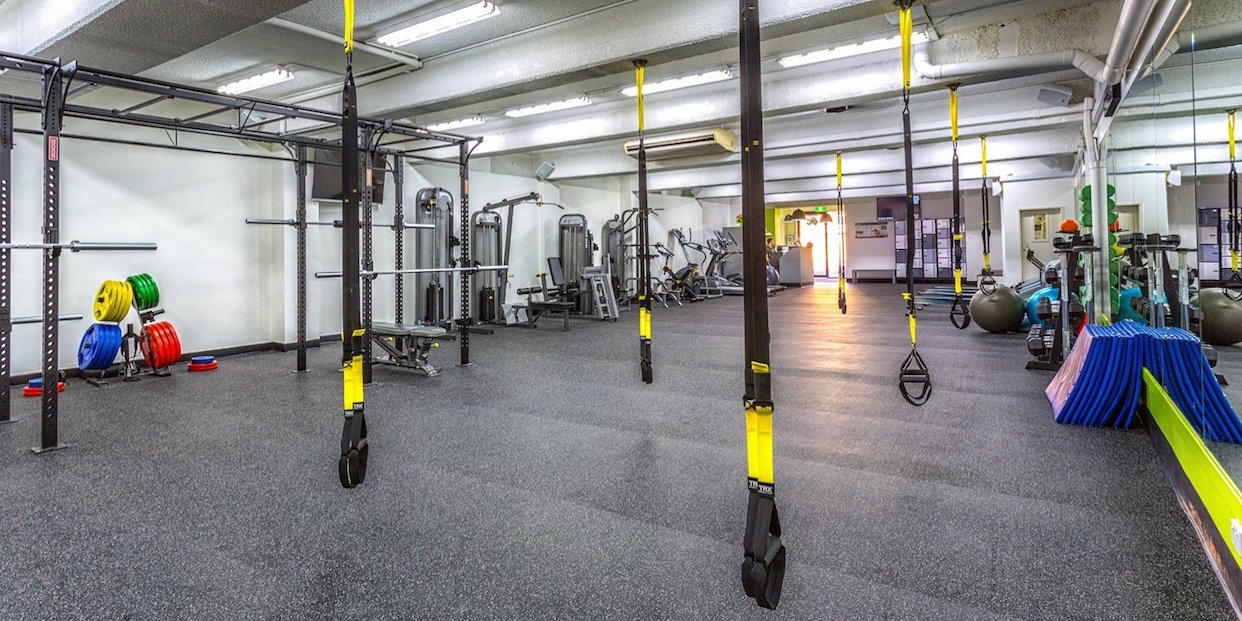
Big commercial gyms are often loud, crowded, and intimidating. For many NDIS participants, these environments create sensory overload that makes consistent exercise feel impossible. Our private studio eliminates "gym-timidation" by offering a controlled, welcoming space where you receive undivided 1-on-1 attention. This focus is essential for those with complex needs who require precise adjustments and constant feedback. You can see our client results to understand how this private setting facilitates real progress for people of all abilities. We pride ourselves on being a community-focused centre where every participant feels seen and supported.
Starting Your Journey with 6X
Taking the first step is simple. You can book an initial NDIS consultation at our Maroubra studio to discuss your plan and physical history. During this first meeting, please bring your current NDIS plan, a list of your primary goals, and any relevant health history from your GP or specialists. We use this information to map out a structured path forward that aligns with your "reasonable and necessary" criteria. We invite you to claim our intro offer today. Experience a training environment built around your success, your privacy, and your long-term independence. Our team is ready to help you rediscover what your body can achieve.
Take Control of Your Physical Independence
Your NDIS journey is about more than just managing daily life; it is about expanding what is possible for your future. By now, you should have a clear understanding of how to use NDIS funding for personal training by aligning your goals with the Improved Health and Wellbeing budget. We have explored the necessity of matching your sessions to "reasonable and necessary" criteria and the administrative ease of working with a provider who understands the system. At 6X Training, we have been delivering specialised NDIS exercise programs since 2011. Our private, inclusive studio in Maroubra provides the perfect environment to build core strength and mobility without the distractions of a commercial gym.
Our results-oriented mentors are ready to provide the expert reporting you need for your next plan review. Don't let confusion over jargon hold you back from the functional gains you deserve. Book your NDIS Personal Training consultation at our Maroubra studio today and start your transformation in a space designed for your success. You have the tools and the funding to move forward with confidence. We look forward to being part of your team.
Frequently Asked Questions
Does the NDIS pay for gym memberships in 2026?
The NDIS generally does not cover the cost of standard gym memberships. These are viewed as everyday living expenses that any Australian might pay. Instead, the scheme focuses on the professional support required to help you exercise safely. You pay for the membership or entry fee out of pocket, while your funding covers the personal trainer who assists with your specific disability-related needs.
What NDIS category covers personal training services?
Personal training is primarily funded under the Capacity Building budget. Specifically, you should look for the "Improved Health and Wellbeing" category, also known as Category 12. This allocation is ring-fenced for services that improve your physical health. Understanding how to use NDIS funding for personal training starts with identifying this specific sub-category in your current plan.
Can I use my NDIS funding for a personal trainer if I'm self-managed?
You can certainly use your funding for a trainer if you are self-managed. This provides you with the highest level of control over which providers you choose. You simply pay your trainer at the end of the session and then upload the receipt to the NDIS portal to be reimbursed. It is a seamless way to access specialised support at a private studio like 6X Training.
What is the difference between an NDIS Exercise Physiologist and a Personal Trainer?
The main difference lies in clinical scope. An Exercise Physiologist is a university-trained professional who manages complex medical conditions through movement. A personal trainer focuses on building functional strength and fitness for participants with stable conditions. If your goal is long-term physical capacity and independence, a trainer is often the most practical and cost-effective choice for your budget.
Do I need a GP referral to use NDIS funds for personal training?
A GP referral is not a mandatory requirement to access personal training through your NDIS plan. However, having a letter from your doctor can be incredibly helpful. It serves as strong evidence that the training is "reasonable and necessary" for your condition. It also ensures your trainer at our Maroubra studio has all the health information needed to keep your sessions safe and effective.
How do I prove to the NDIS that personal training is reasonable and necessary?
To prove a support is "reasonable and necessary," you must link it to your specific NDIS goals. You need to show that 1-on-1 training will produce a positive outcome, such as improved mobility or increased independence. Providing regular progress reports from your trainer is the best way to demonstrate this value to the NDIA during your plan review.
Can my support worker come to the personal training sessions with me?
Your support worker is more than welcome to attend your sessions. They can assist you with transport to our Maroubra centre or help with personal care needs during your workout. While the NDIS funds the personal trainer for the exercise support, your support worker's time is billed separately through your Core budget. This ensures you have the full assistance required to succeed.
What happens if I don't have 'Improved Health and Wellbeing' in my plan?
If this category is missing, you cannot use your existing funds for personal training. NDIS budgets are not flexible between different Capacity Building sub-categories. You will need to request a plan review to have "Improved Health and Wellbeing" added. We recommend preparing a statement about how to use NDIS funding for personal training to help achieve your independence goals before your next meeting.
Article by
Brad Ellison
Brad Ellison is a personal trainer, weight loss coach and founder of 6X Training in Maroubra, Sydney. Since 2006, he has helped clients across the Eastern Suburbs lose weight, build strength and improve their health through personalised fitness coaching, nutrition support and accountability. His expertise includes fat loss, body composition improvement, strength training and sustainable lifestyle change.


