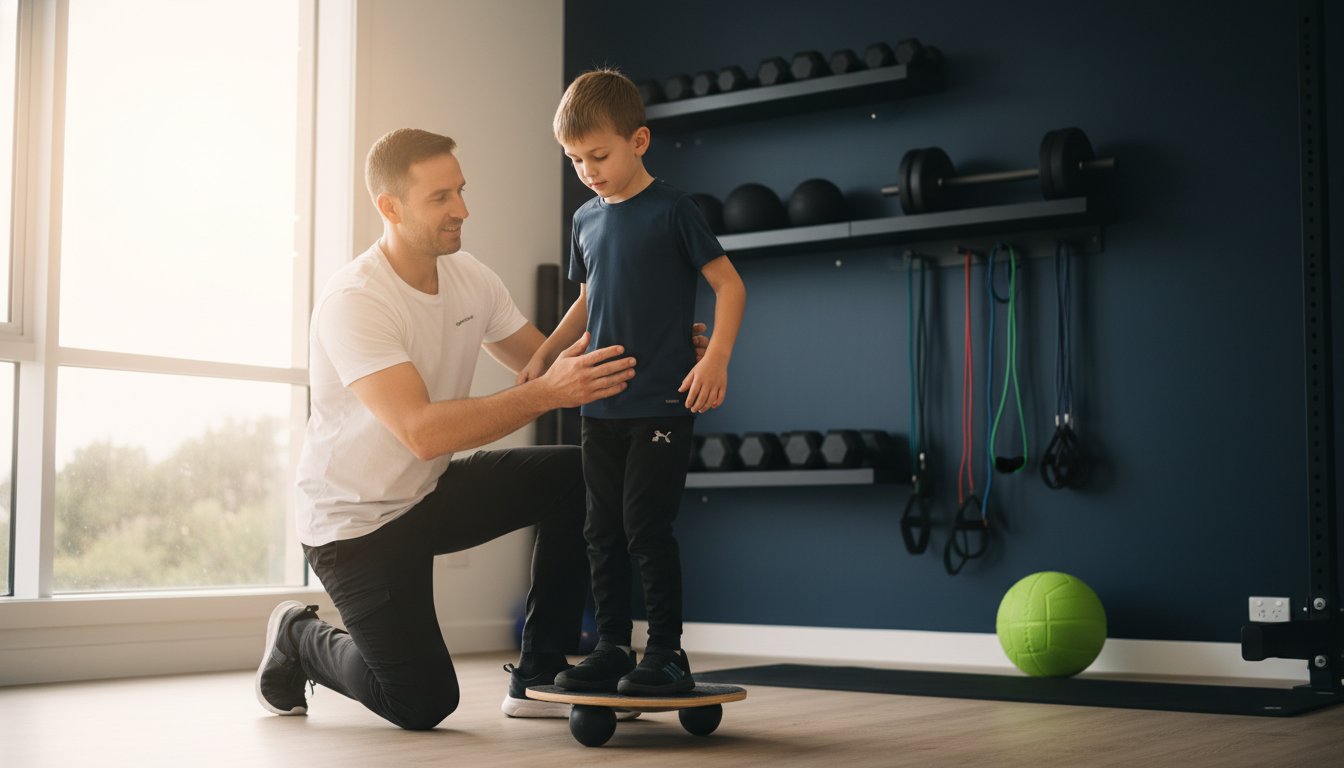
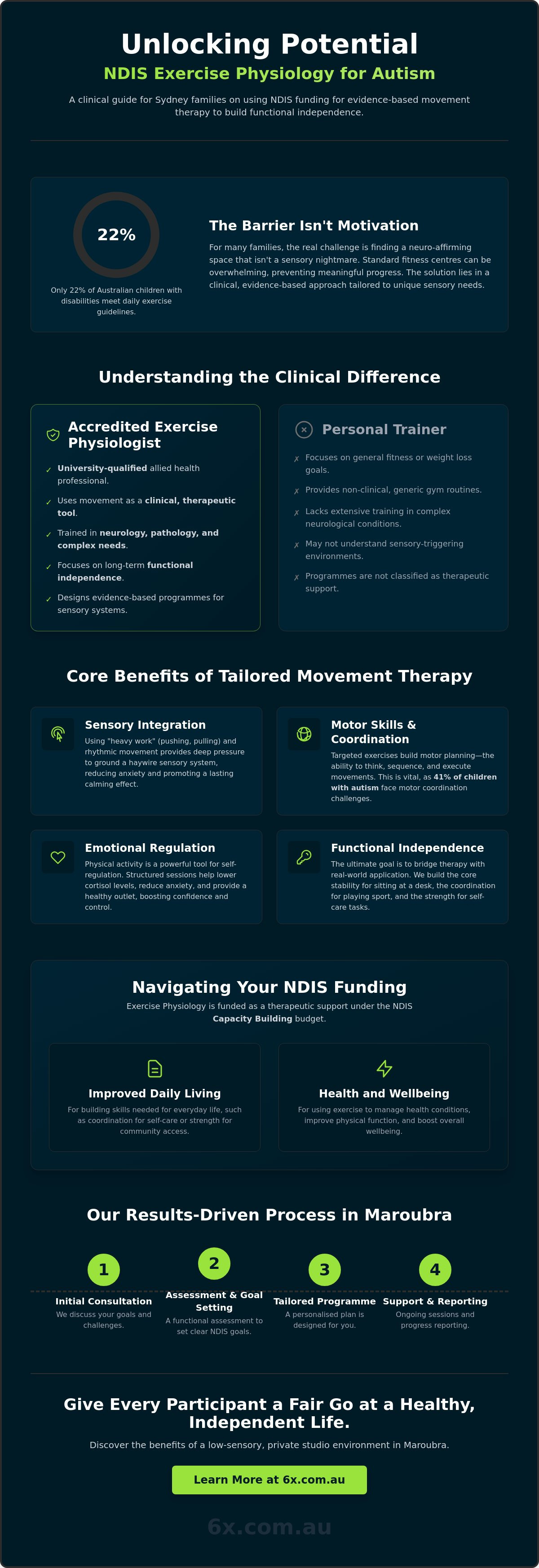
Did you know that only 22% of Australian children with disabilities meet the recommended daily exercise guidelines? For many Sydney families, the barrier isn't a lack of motivation; it's the challenge of finding a neuro-affirming space that isn't a sensory nightmare. Engaging a qualified exercise physiologist for autism NDIS provides a clinical, evidence-based alternative to the overwhelming atmosphere of a standard fitness centre. It's about more than just physical fitness. It's about giving every participant a fair go at a healthy, independent life.
You've likely felt the frustration of navigating complex NDIS budget categories or worrying if a provider truly understands your child's unique sensory needs. We understand that you're looking for results that go beyond the treadmill. This guide will show you how NDIS-funded exercise physiology helps individuals build gross motor skills, improve emotional regulation, and find a genuine sense of community. We'll preview the latest 2025-26 NDIS price limits and explain how to use your Capacity Building funding to secure the structured, professional support your family deserves.
Key Takeaways
- Understand why an accredited exercise physiologist for autism NDIS is an allied health professional who uses movement as a clinical tool to build functional independence.
- Explore the physical and emotional benefits of tailored movement, including improved body awareness and more effective emotional regulation.
- Recognise the importance of a low-sensory environment and why a private studio is more effective for neurodivergent participants than a loud, crowded fitness centre.
- Learn how to navigate your NDIS plan to access funding under the Capacity Building categories for Improved Daily Living or Health and Wellbeing.
- Discover the structured process for starting a results-driven program at our Maroubra facility to support long-term development and social connection.
What is an Exercise Physiologist for Autism and NDIS?
An Accredited Exercise Physiologist (AEP) is a university-qualified allied health professional, not a general fitness instructor. When families search for an exercise physiologist for autism NDIS, they are looking for a clinician capable of designing evidence-based movement programmes tailored to complex needs. Exercise physiology involves the clinical study of how the body responds to physical activity, but for neurodivergent participants, it serves as a vital therapeutic intervention. At 6X Training, we move away from short-term fitness fads or generic gym routines. Our focus is on the systematic development of physical capacity to support long-term independence. We treat movement as a form of therapy that respects the unique neurological profile of each individual, ensuring that every session has a clear, functional purpose.
EP vs. Personal Training: Understanding the Clinical Difference
The clinical difference between a personal trainer and an AEP lies in the extensive university training AEPs receive in neurology and pathology. While a personal trainer typically focuses on general fitness or weight loss, an AEP understands how to modulate exercise to suit a sensitive or overstimulated nervous system. We look at the "why" behind every movement. For an autistic participant, a standard gym routine might be physically taxing or sensory-triggering without providing any real-world benefit. We design specialised programmes that prioritise motor planning and stability. This ensures that every session contributes to the participant's ability to perform daily tasks with greater ease, moving beyond simple repetitions to achieve meaningful physical milestones.
The Role of Exercise in the NDIS Framework
Within the NDIS ecosystem, exercise physiology is classified as a therapeutic support. It is a vital component of the "Capacity Building" category, which aims to reduce the impact of disability on a person's life by fostering new skills. By improving physical literacy, we help participants achieve the core NDIS goal of increased social and economic participation. Whether you are located in Maroubra, Randwick, or the surrounding Eastern Suburbs, our team works to ensure these therapeutic supports are seamlessly integrated into your lifestyle. We focus on building the physical strength required for self-care and the coordination needed to navigate the local community safely. This might mean improving the balance and core stability required for sitting at a school desk or the coordination needed to play sport with peers. By focusing on these functional outcomes, we bridge the gap between clinical therapy and real-world application.
Key Benefits of Exercise Physiology for Individuals with Autism
Movement is a powerful tool for self-regulation and physical development. For many, a session with an exercise physiologist for autism NDIS is the highlight of their week because it provides a safe space to explore their physical capabilities. Research from the Australian Bureau of Statistics (2018) indicates that roughly 41% of children with autism experience challenges with motor coordination. This isn't just about being "uncoordinated"; it's about how the brain communicates with the muscles. By addressing these gaps, we help participants move from a state of frustration to one of confidence and control.
Sensory Integration and Movement
Many neurodivergent individuals seek or avoid sensory input. We use "heavy work", which involves activities like pushing, pulling, or lifting weights, to provide deep pressure into the joints and muscles. This resistance training helps ground a haywire sensory system and provides a calming effect that can last for hours after the session. Rhythmic, repetitive movements like rowing or cycling can also offer comfort, helping to lower cortisol levels and reduce anxiety. Proprioception is the body's internal GPS that exercise helps calibrate. Following the ESSA Guidelines for NDIS, our clinicians ensure these interventions are evidence-based and tailored to the individual's sensory profile.
Boosting Motor Skills and Coordination
Motor planning is the ability to think through, sequence, and execute a physical task. For someone with autism, even a simple movement like stepping over an obstacle can feel complex. Our AEPs break these tasks down into manageable steps, building the neural pathways required for success. We often work with participants who have low muscle tone or engage in "toe walking", which can lead to long-term postural issues. Through targeted strength work, we improve stability and gait. These physical wins translate directly into the real world. Better balance on the playground leads to better social inclusion; improved posture in the workplace leads to greater endurance and focus.
Beyond the physical, we prioritise metabolic health and social connection. Individuals on the spectrum are often at a higher risk for secondary health issues due to lower activity levels. We address this head-on in a way that feels achievable and supportive. If you're ready to see how a structured, clinical approach can make a difference, consider exploring our introductory program to get started on a new path. We're here to help you navigate the journey toward better health and greater independence.
Why a Private Studio Beats a Big Gym for NDIS Participants
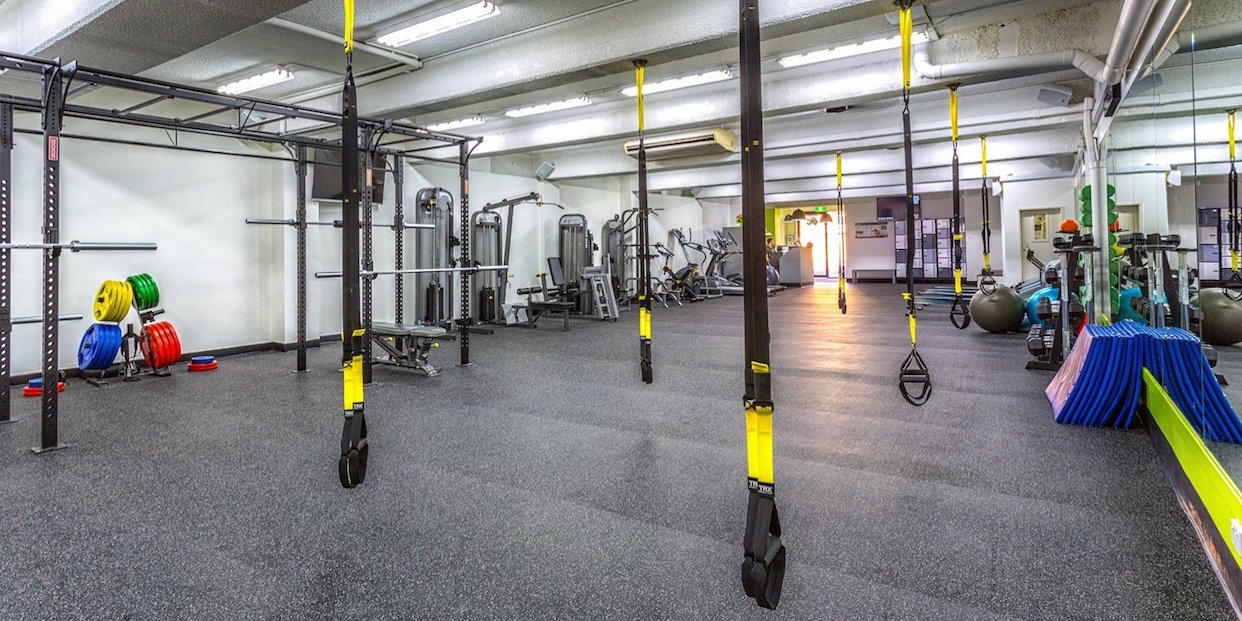
Commercial Sydney gyms are often designed to be high-energy, but for someone with autism, that energy feels like an assault on the senses. Thumping bass, clanging weights, and the unpredictable movement of crowds can trigger immediate sensory shutdown. This is why many families initially choose a mobile provider. However, staying at home can limit a participant's growth and physical progress. A private studio offers the perfect middle ground. Working with an exercise physiologist for autism NDIS in a controlled setting provides access to professional-grade resistance equipment and specialised tools that simply don't fit in a living room. This "third space" allows participants to step out of their home comfort zone without the trauma of a chaotic commercial facility.
Creating a Safe Sensory Environment
At 6X Training in Maroubra, we actively manage the environment to suit our NDIS clients. We control the lighting, keep the music at a respectful level, and organise the layout to ensure clear paths and predictable spaces. This level of control is impossible in a general-access gym. The benefit of 1-on-1 Personal Trainer Sydney sessions in a private studio is the undivided attention of a professional. When a participant feels seen and heard, their anxiety levels drop. This calm state is where the real work on motor skills and strength begins. We don't just provide a place to train; we provide a sanctuary for progress.
The Social Bridge: Moving from Home to Community
One of the most significant advantages of a studio setting is its role as a social bridge. Training in a professional facility builds the confidence required to eventually navigate other public spaces. It's a structured way to practice social interactions in a non-judgmental community. Our team is trained to be patient, authentic, and results-driven. We've seen participants who were initially hesitant to leave their cars grow into confident individuals who walk through our doors with a smile. Our Maroubra location is easily accessible for families in Coogee, Malabar, and Randwick, making it a convenient local hub for those seeking a sense of belonging.
Choosing a studio over a big gym or a home session provides several key advantages:
- Access to specialised equipment: From the InBody 570 scan to clinical-grade resistance machines that help with "heavy work" and proprioception.
- Predictability: The same friendly faces and the same structured environment every week.
- Professional accountability: A dedicated space that signals it's time to focus on health and wellbeing.
- Community connection: A chance to be part of a local Sydney fitness community that celebrates diverse abilities.
By moving the intervention into a specialised studio, we help participants build the physical and mental stamina they need for a fair go in the wider world. It's a systematic approach that values individual needs over corporate gym quotas.
Navigating NDIS Funding for Exercise Physiology
Understanding your NDIS budget is the first step toward securing professional support. For many Sydney families, the administrative side of the NDIS can be more exhausting than the therapy itself. To access an exercise physiologist for autism NDIS, you primarily look at two budget lines within your Capacity Building support. The most frequent category used for Accredited Exercise Physiology is "Improved Daily Living". This is because the NDIS views EP as a clinical intervention designed to build the functional skills needed for independence. The second category is "Improved Health and Wellbeing", which focuses specifically on physical maintenance and preventing secondary health issues.
At 6X Training, we work with participants who are Self-Managed or Plan-Managed. This allows us the flexibility to tailor our results-driven programs directly to your specific needs without the red tape of larger, impersonal agencies. The core requirement for any NDIS-funded service is that it must be "reasonable and necessary". In practice, this means the therapy must directly relate to the goals outlined in your plan. If your goal is to "improve community participation" or "increase independence in daily tasks", exercise physiology is often a clear and justifiable fit.
Capacity Building vs. Health and Wellbeing
The distinction between these two categories is subtle but important. Capacity Building is about skill acquisition. For example, building the core strength required for self-care or the coordination needed to navigate public transport. In contrast, Health and Wellbeing focuses on physical maintenance and disease prevention. While both are valuable, your choice of category often depends on how your goals were written during your planning meeting. You can learn more about using NDIS for personal training and exercise physiology to see which pathway suits your current budget.
The Importance of Goal Setting
The NDIS is an outcome-based scheme. This means every dollar spent must show progress toward a specific result. Our AEPs take this responsibility seriously. We provide the detailed documentation required for your plan reviews, ensuring that the NDIA sees the tangible benefits of your sessions. We use objective data to back up our clinical observations. For instance, our InBody Scans provide precise measurements of muscle mass and body composition. This data-driven approach removes the guesswork and provides clear evidence of physical transformation, making the case for continued funding much stronger.
We believe in transparency and efficiency. If you are unsure how to align your budget with your health goals, our team can help you understand the requirements. You can start with our introductory program to see how our structured approach fits within your NDIS journey. We're here to ensure your funding is used effectively to create lasting change.
Getting Started with 6X Training in Maroubra
Finding the right exercise physiologist for autism NDIS shouldn't feel like an uphill battle. At 6X Training, we've spent years refining a process that takes the stress out of starting a new programme. We understand that for families in Matraville, Kingsford, and Mascot, consistency and local expertise are non-negotiable. Led by Braden Silver, our team brings a wealth of experience in supporting neurodivergent participants across Sydney's Eastern Suburbs. We don't offer generic gym routines. We provide a structured, results-oriented environment where long-term support is the standard, not the exception. We're committed to delivering the specific outcomes your NDIS plan demands.
Your First Session: What to Expect
We believe the first step should be welcoming, not overwhelming. Your initial consultation is a non-intimidating assessment where we focus on movement patterns, personal goals, and sensory preferences. This isn't a "test" of ability. It's a chance for us to understand how to best support the participant's nervous system. We personalise every programme to align with specific interests. If a participant is motivated by a particular sport, we use those movements to build strength. If they prefer quiet, rhythmic tasks, we prioritise that. This tailored approach ensures the studio feels like a safe, predictable space where they can truly thrive. Our Maroubra community is built on this foundation of inclusive, professional care.
Join the 6X Community in the Eastern Suburbs
Reliability is the cornerstone of our service. 6X Training has been a trusted name in the Sydney health industry since 2011, providing a level of stability that is often hard to find. Our Maroubra location is a convenient hub for residents in Botany, Clovelly, and the surrounding suburbs who are looking for more than just a standard gym. We position ourselves as a results-driven mentor in your journey. By combining our clinical expertise with a warm, community-focused atmosphere, we help participants bridge the gap between home-based therapy and active community participation. We value transparency and efficiency, ensuring every session moves the needle toward greater independence.
You don't have to navigate the complexities of disability fitness alone. Our team is ready to provide the professional guidance and accountability required to see real, measurable progress. We invite you to experience the difference a dedicated private studio can make for your family's health and wellbeing. Contact 6X Training to discuss your NDIS goals today and take the first step toward a more confident, active future with an exercise physiologist for autism NDIS who understands your needs.
Empower Your Journey Toward Greater Independence
Achieving meaningful progress requires more than just a standard fitness routine. It demands a clinical approach that respects individual sensory needs while pushing for functional growth. By choosing a private, controlled studio over a chaotic commercial gym, you provide the stable foundation required for development. We've seen how targeted movement builds the coordination and emotional regulation needed for active participation in daily life.
As Maroubra's premier private studio since 2011, 6X Training offers specialised expertise in neurodivergent fitness programmes. We proudly support both Plan-Managed and Self-Managed participants, ensuring your funding works effectively to meet your specific goals. Engaging an exercise physiologist for autism NDIS is a commitment to long-term confidence and physical autonomy.
Our team is ready to act as your partner in this journey, offering the professional accountability and results-driven mentorship you deserve. Let's turn your NDIS goals into tangible physical wins together.
Book a Consultation for NDIS Exercise Physiology at 6X Maroubra
We look forward to welcoming you into our supportive local community and helping you thrive.
Frequently Asked Questions
Can I use my NDIS funding for exercise physiology at 6X Training?
Yes, you can certainly use your NDIS funding here if your plan is self-managed or plan-managed. We provide invoices that align with NDIS requirements, typically under the Capacity Building support categories. It's a straightforward process that allows you to access a qualified exercise physiologist for autism NDIS without the typical wait times found at larger institutions. We suggest checking that your plan has funding allocated for "Improved Daily Living" or "Improved Health and Wellbeing" before your first session.
What is the difference between an exercise physiologist and a personal trainer?
The primary difference lies in the level of clinical training and university qualification. An Accredited Exercise Physiologist (AEP) has completed a four-year degree and is trained to prescribe movement for complex medical conditions and neurodivergent needs. While personal trainers are excellent for general fitness, an AEP understands the neurological and sensory complexities of autism. This allows them to create a therapeutic environment that prioritises safety, motor planning, and long-term functional goals over simple aesthetic results.
Is 6X Training a registered NDIS provider?
6X Training operates as a provider for self-managed and plan-managed NDIS participants. This structure allows us to offer a more personalised, community-focused experience in our Maroubra studio. If you are agency-managed, you may wish to discuss your options with your Support Coordinator to see if you can transition to plan-management. This change often provides greater choice and control, allowing you to select specialised boutique facilities that better suit your sensory and physical requirements.
How does exercise help with autism sensory processing issues?
Exercise acts as a grounding tool by providing the brain with intense proprioceptive and vestibular input. Activities involving resistance or "heavy work" help organise the sensory system, which can lead to a significant reduction in anxiety and meltdowns. By working with an exercise physiologist for autism NDIS, participants learn to recognise their own sensory needs through movement. This structured physical activity helps regulate the nervous system, making it easier to navigate loud or crowded environments outside of the studio.
Do I need a referral to see an exercise physiologist for autism?
You don't strictly need a GP referral to access exercise physiology through your NDIS plan. However, having a letter from your doctor or a specialist can be very helpful during your plan review. This documentation helps prove that the service is "reasonable and necessary" for your specific goals. Our team can work alongside your existing allied health professionals to ensure your movement programme supports your broader therapy and independence objectives.
What if the participant is non-verbal or has high support needs?
Our programmes are designed to be inclusive and adaptable for all levels of communication and support. We use visual schedules, clear demonstrations, and patient, one-on-one coaching to ensure every participant feels safe and understood. We focus on the individual's strengths rather than their limitations. Whether a participant needs a high level of physical assistance or specialised communication tools, we adapt our environment to ensure they can participate fully and achieve their goals.
Where in Sydney is 6X Training located?
Our private studio is located in Maroubra, in the heart of Sydney's Eastern Suburbs. We are conveniently positioned for families living in surrounding areas like Matraville, Kingsford, Mascot, and Coogee. Being a local facility means we understand the community and can provide a consistent "third space" for our clients. Our location is designed to be easily accessible while remaining quiet and controlled, avoiding the chaotic atmosphere of larger commercial gym precincts.
How do I include exercise physiology in my NDIS plan review?
To include this service in your next plan, you should link it to goals regarding independence, social participation, or physical health. We provide progress reports that document improvements in motor skills, emotional regulation, and functional strength. Presenting this objective data to your NDIS planner or Local Area Coordinator (LAC) makes it much easier to justify continued funding. It's about showing how movement directly helps you achieve a "fair go" in your daily life and community.
Article by
Brad Ellison
Brad Ellison is a personal trainer, weight loss coach and founder of 6X Training in Maroubra, Sydney. Since 2006, he has helped clients across the Eastern Suburbs lose weight, build strength and improve their health through personalised fitness coaching, nutrition support and accountability. His expertise includes fat loss, body composition improvement, strength training and sustainable lifestyle change.


